


Reiwa 7 School Town Collaboration Project Connecting Students and Communities Initiative Introduction

Reiwa 7 Introducing the efforts of the school town collaboration project that connects students and the community.

The “Gakumachi Collaboration Project” is a “Gakumachi Collaboration Project” in which universities, students, and the community “collaborate” to solicit projects and projects that work on urban development and regional revitalization in Kyoto, and provide subsidy support.
We will inform you of the efforts of this year’s adopted organizations! !


【Activity Introduction (1)】Ritsumeikan University “Kinugasa Farm Kreis”
On Wednesday, August 20th, the “Kreis Community Cafeteria” was held at Ritsumeikan University Kinugasa Campus, and I visited it!

In 2020, “Kinugasa Farm Kreis” was launched in the midst of the coronavirus pandemic, and is a student organization that grows vegetables in collaboration with the local community. Approximately 70 students are taking the lead in activities that are conscious of local production, local exchange, and SDGs, starting with making mulch from fallen leaves with local people and delivering the harvested vegetables to school cafeterias and the community.

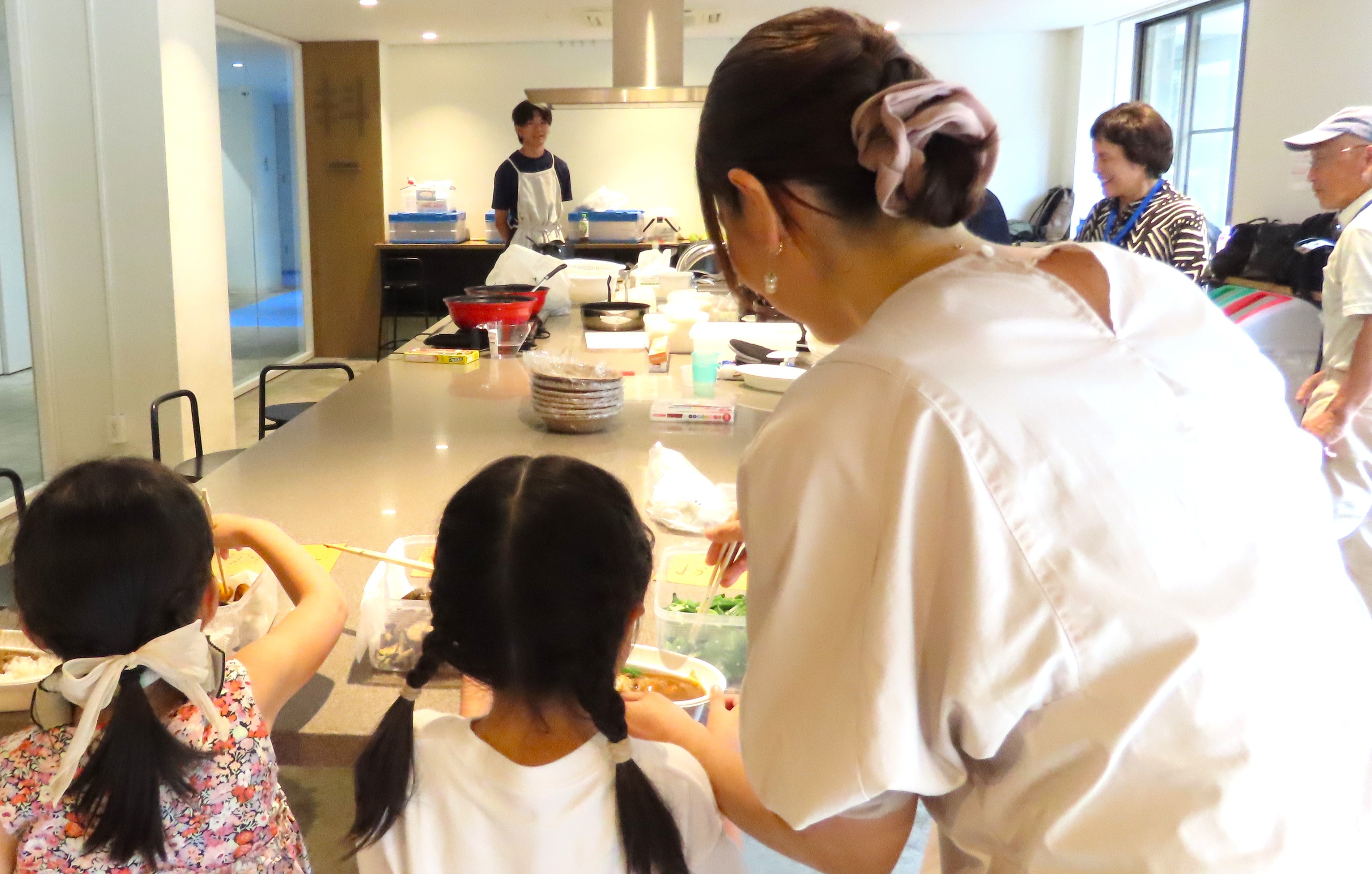
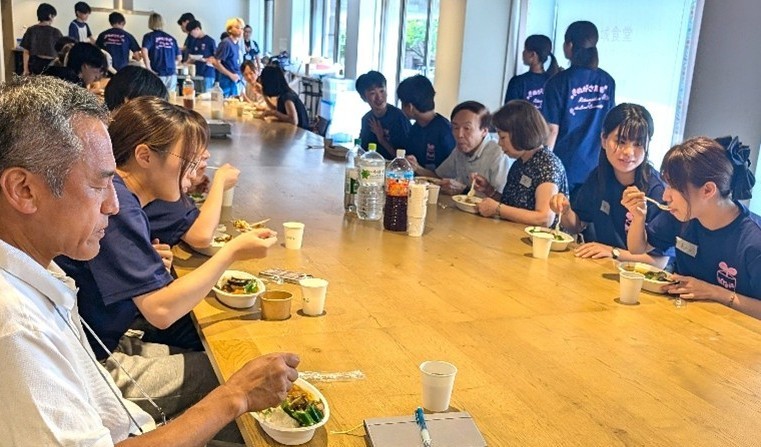
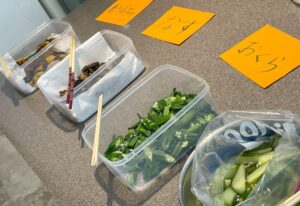
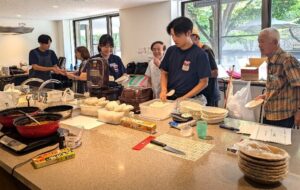
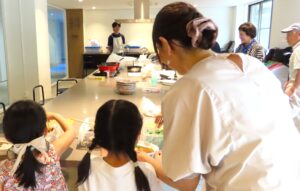
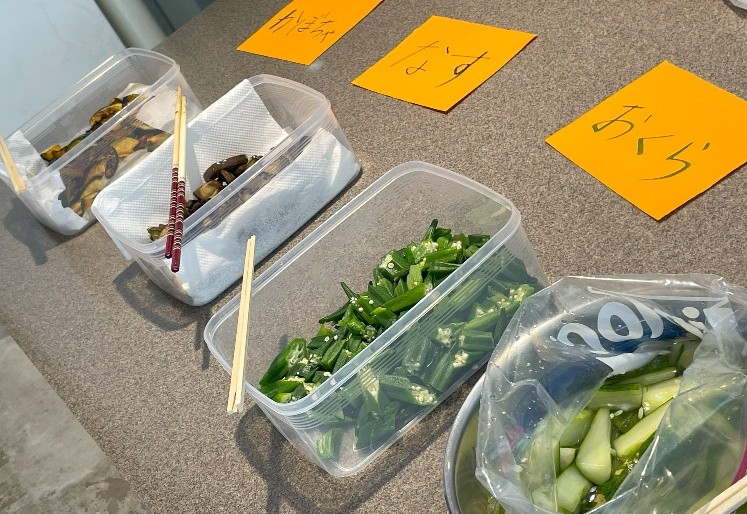
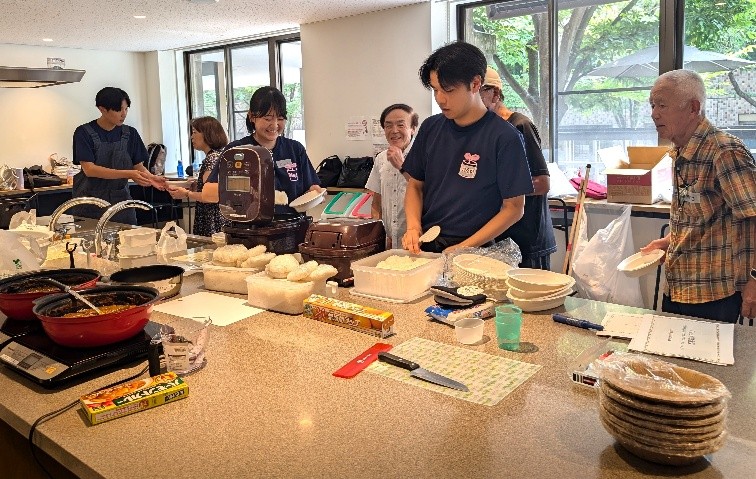
At the “Kreis Community Cafeteria”, which was held for the first time, 20 students and 15 local people participated in the curry using vegetables they grew themselves.                                          ”Because it is an area where there are many elderly people and children who eat alone, we wanted to create a warm table where everyone can gather around,” says the representative, Marin Shinohara.

As for public relations activities, posters were distributed to neighboring districts and bulletin boards set up in front of the farm were used. Since the farm is located on a walking course in front of Tochi-in, it naturally caught the attention of local people and became an opportunity to visit.                            The most difficult part of preparing for the event was not being able to read the harvest of vegetables. He said he was worried because he didn’t know which age group would come, but he was relieved that many people actually came to visit.                        In addition, in the past, when the university cafeteria closed during the summer vacation, it was difficult to find a supplier of the harvested vegetables, but it was a great achievement that we were able to utilize many summer vegetables through this event.

Regarding the future, Mr. Shinohara said, “I would be happy if you could come to the farm and have the opportunity to actually have fun talking with the students, and I hope that the fun of farming and awareness of SDGs will naturally spread through this activity.”

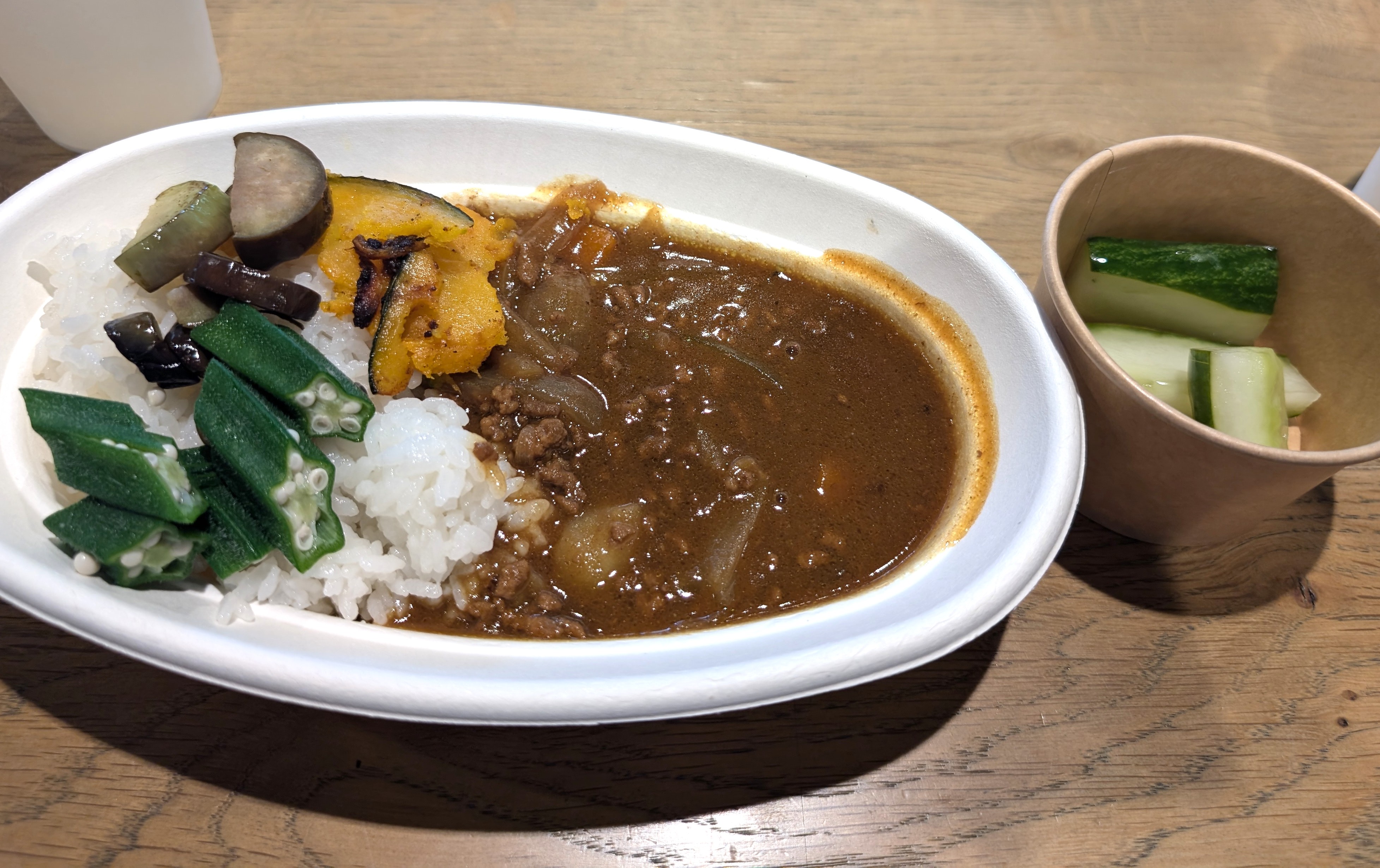
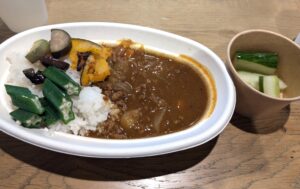
Finally, we who visited for the interview also feasted on freshly picked vegetable curry. A dish filled with the taste of fresh vegetables and the desire for activities. It was very delicious.

Thank you for the meal!

Please check the activity status at ↓.                                                                        https://www.instagram.com/kinugasanoen__kreis/


【Activity Introduction (2)】Ritsumeikan University “Fujibakama Project Student Team along the Randen Line”

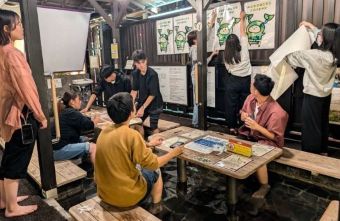
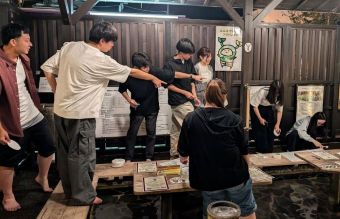
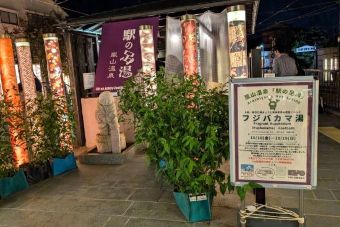
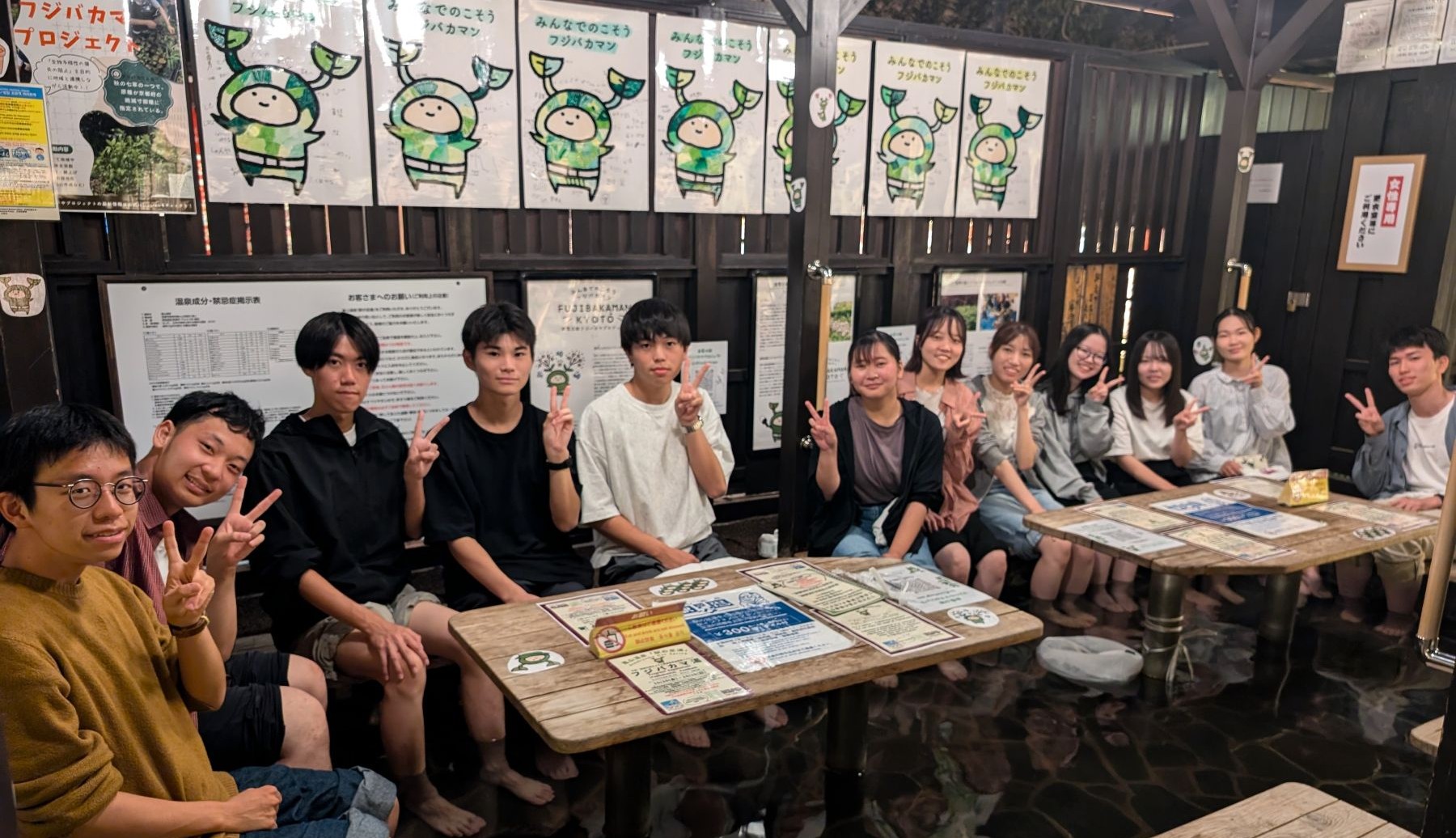
From October 10th (Friday) ~ 19th (Sunday), “Fujibakama Yu” was held in Randen Arashiyama Station. On Thursday, the 9th, the day before the event, we covered the preparations!

*What is Fujibakama?                                                      Fragrant flowers with white to pale purple flowers in autumn. It was used in sachets during the Heian period, and is now popular as a flower called the migratory butterfly “Asagi Madara”.

The Fujibakama Project, which began in 2021, is carried out throughout the year with the cooperation of students, Randen and Ritsumeikan University faculty and staff, and local people.                                                 In spring, Fujibakama seedlings are planted, grown in summer, and bloom in autumn. Local elementary school students and volunteers also participate, deepening exchanges through the process of nurturing.

“Fujibakama Yu” is an event that has been going on since the beginning of the project, and it started with the desire to let many people know the charm of Fujibakama. Through the event held in Arashiyama, a tourist destination, we widely disseminate our activities to local people and tourists.

In preparation, we cooperated with Randen and landscaping companies to coordinate material transportation and setup. We had local people participate in the bud cuttings and planting work, and we were able to proceed with the cooperation of the entire region.

Mr. Iinuma, the representative, says, “The most difficult part of growing Fujibakama is watering.”                          Fujibakama is a water-loving plant that requires daily watering. This year, we used the subsidy money to install irrigation equipment and water automatically, but the students continued to water in turns during the summer vacation. As a result of their efforts, the flowers bloomed well this year and grew splendidly.

Growing strong Fujibakama will also lead to community development. If the leaves grow vigorously, events such as foot baths and scent bag making will be enhanced, and interactions with local people will be further expanded. In fact, Fujibakama has become a place that connects people, such as local people, students, faculty and staff, such as local people, students, and faculty members who visit to see the flowers.                                                          

In the future, while valuing the idea of “protecting and nurturing”, he would like to expand his activities together with the community.                             As a later story, it seems that the migratory butterfly “Asagi Madara” also flew to Fujibakama on the Kinugasa Campus!                                 I look forward to the expansion of conservation activities through Fujibakama in the future.

Please check the activity status at ↓.                                                                  https://www.instagram.com/fujibakama.r/


【Activity Introduction (3)】Kyoto City University of Arts, Kyoto University of the Arts, Kyoto Junior College of Economics, Kyoto University “Hozoji Exhibition Project”

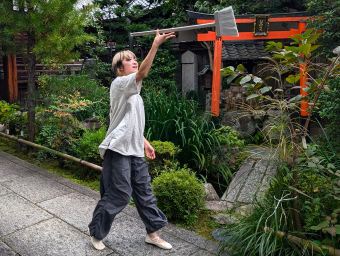
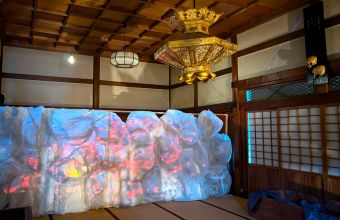
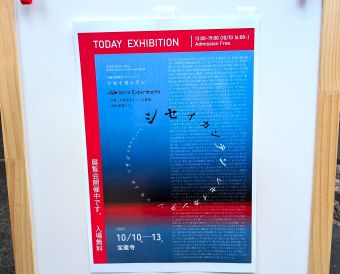
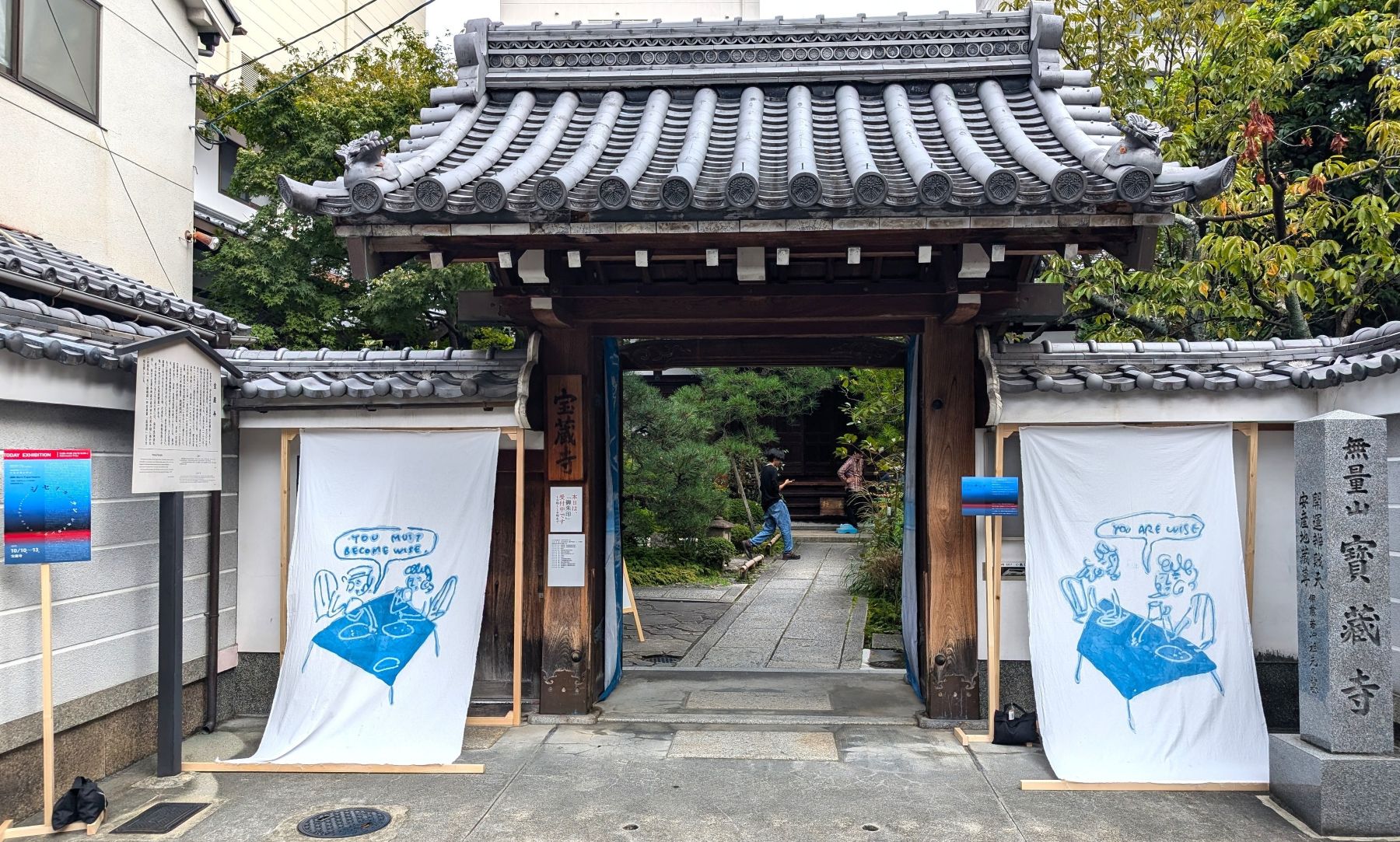
On Saturday, October 11th, we covered the Hozoji exhibition project “Shisei Kanten”.

This project began with the desire of students from Kyoto City University of Arts to hold an exhibition in a place that is unique to Kyoto, and the project began at Hozoji Temple through the introduction of university officials. Under the call, students from Kyoto City University of Arts and other universities gathered to form a team of members who met for the first time.

From this year, we will hold a research work meeting once a month. He has been active at Hozoji Temple, universities, and Nishinari Ward, Osaka City, and has deepened his thoughts on “life and death” and “connection with people” through lectures at temples, meditation sessions, and visits to art community spaces in Nishinari Ward.

Through repeated exchanges of opinions, it became clear that each member’s interest could be concentrated in the word “view of life and death”, and the theme of the exhibition was decided to be “view of life and death”. The reason is that the affinity with the temple and the interest of the students overlapped. Each member created a work based on their own experiences and thoughts, and held an exhibition over four days. At the opening, a performance using motion capture was also shown, making it a time when traditional space and modern expression were harmonious.

In addition to posters, public relations were carried out through nearby temples, Kyoto Kawaramachi Station, and art-related facilities, and many local residents and tourists visited. Although there was no collaboration with local residents, Mr. Onuma, the representative, said that by opening Hozoji Temple to the community, he was able to create a place where people can gather and dialogue is born.

Although it is mainly a student, this exhibition confronts the heavy and deep theme of “view of life and death” head-on, and each member attempts to express it in a modern way. It was a place to ask many questions and awareness to visitors.

This exhibition was the first large-scale exhibition for the project. In the future, he plans to look back on his activities and consider his next development based on this experience.

I’m looking forward to the next exhibition!


Reiwa 7 School Town Collaboration Project Connecting Students and Communities Initiative Introduction

Reiwa 7 Introducing the efforts of the school town collaboration project that connects students and the community.

The “Gakumachi Collaboration Project” is a “Gakumachi Collaboration Project” in which universities, students, and the community “collaborate” to solicit projects and projects that work on urban development and regional revitalization in Kyoto, and provide subsidy support.
We will inform you of the efforts of this year’s adopted organizations! !


【Activity Introduction (1)】Ritsumeikan University “Kinugasa Farm Kreis”
On Wednesday, August 20th, the “Kreis Community Cafeteria” was held at Ritsumeikan University Kinugasa Campus, and I visited it!

In 2020, “Kinugasa Farm Kreis” was launched in the midst of the coronavirus pandemic, and is a student organization that grows vegetables in collaboration with the local community. Approximately 70 students are taking the lead in activities that are conscious of local production, local exchange, and SDGs, starting with making mulch from fallen leaves with local people and delivering the harvested vegetables to school cafeterias and the community.

At the “Kreis Community Cafeteria”, which was held for the first time, 20 students and 15 local people participated in the curry using vegetables they grew themselves.                                          ”Because it is an area where there are many elderly people and children who eat alone, we wanted to create a warm table where everyone can gather around,” says the representative, Marin Shinohara.

As for public relations activities, posters were distributed to neighboring districts and bulletin boards set up in front of the farm were used. Since the farm is located on a walking course in front of Tochi-in, it naturally caught the attention of local people and became an opportunity to visit.                            The most difficult part of preparing for the event was not being able to read the harvest of vegetables. He said he was worried because he didn’t know which age group would come, but he was relieved that many people actually came to visit.                        In addition, in the past, when the university cafeteria closed during the summer vacation, it was difficult to find a supplier of the harvested vegetables, but it was a great achievement that we were able to utilize many summer vegetables through this event.

Regarding the future, Mr. Shinohara said, “I would be happy if you could come to the farm and have the opportunity to actually have fun talking with the students, and I hope that the fun of farming and awareness of SDGs will naturally spread through this activity.”

Finally, we who visited for the interview also feasted on freshly picked vegetable curry. A dish filled with the taste of fresh vegetables and the desire for activities. It was very delicious.

Thank you for the meal!

Please check the activity status at ↓.                                                                        https://www.instagram.com/kinugasanoen__kreis/


【Activity Introduction (2)】Ritsumeikan University “Fujibakama Project Student Team along the Randen Line”

From October 10th (Friday) ~ 19th (Sunday), “Fujibakama Yu” was held in Randen Arashiyama Station. On Thursday, the 9th, the day before the event, we covered the preparations!

*What is Fujibakama?                                                      Fragrant flowers with white to pale purple flowers in autumn. It was used in sachets during the Heian period, and is now popular as a flower called the migratory butterfly “Asagi Madara”.

The Fujibakama Project, which began in 2021, is carried out throughout the year with the cooperation of students, Randen and Ritsumeikan University faculty and staff, and local people.                                                 In spring, Fujibakama seedlings are planted, grown in summer, and bloom in autumn. Local elementary school students and volunteers also participate, deepening exchanges through the process of nurturing.

“Fujibakama Yu” is an event that has been going on since the beginning of the project, and it started with the desire to let many people know the charm of Fujibakama. Through the event held in Arashiyama, a tourist destination, we widely disseminate our activities to local people and tourists.

In preparation, we cooperated with Randen and landscaping companies to coordinate material transportation and setup. We had local people participate in the bud cuttings and planting work, and we were able to proceed with the cooperation of the entire region.

Mr. Iinuma, the representative, says, “The most difficult part of growing Fujibakama is watering.”                          Fujibakama is a water-loving plant that requires daily watering. This year, we used the subsidy money to install irrigation equipment and water automatically, but the students continued to water in turns during the summer vacation. As a result of their efforts, the flowers bloomed well this year and grew splendidly.

Growing strong Fujibakama will also lead to community development. If the leaves grow vigorously, events such as foot baths and scent bag making will be enhanced, and interactions with local people will be further expanded. In fact, Fujibakama has become a place that connects people, such as local people, students, faculty and staff, such as local people, students, and faculty members who visit to see the flowers.                                                          

In the future, while valuing the idea of “protecting and nurturing”, he would like to expand his activities together with the community.                             As a later story, it seems that the migratory butterfly “Asagi Madara” also flew to Fujibakama on the Kinugasa Campus!                                 I look forward to the expansion of conservation activities through Fujibakama in the future.

Please check the activity status at ↓.                                                                  https://www.instagram.com/fujibakama.r/

Reiwa 7 School Town Collaboration Project Connecting Students and Communities Initiative Introduction

Reiwa 7 Introducing the efforts of the school town collaboration project that connects students and the community.

The “Gakumachi Collaboration Project” is a “Gakumachi Collaboration Project” in which universities, students, and the community “collaborate” to solicit projects and projects that work on urban development and regional revitalization in Kyoto, and provide subsidy support.
We will inform you of the efforts of this year’s adopted organizations! !


【Activity Introduction】Ritsumeikan University “Kinugasa Farm Kreis”
On Wednesday, August 20th, the “Kreis Community Cafeteria” was held at Ritsumeikan University Kinugasa Campus, and I visited it!

In 2020, “Kinugasa Farm Kreis” was launched in the midst of the coronavirus pandemic, and is a student organization that grows vegetables in collaboration with the local community. Approximately 70 students are taking the lead in activities that are conscious of local production, local exchange, and SDGs, starting with making mulch from fallen leaves with local people and delivering the harvested vegetables to school cafeterias and the community.

At the “Kreis Community Cafeteria”, which was held for the first time, 20 students and 15 local people participated in the curry using vegetables they grew themselves.                                          ”Because it is an area where there are many elderly people and children who eat alone, we wanted to create a warm table where everyone can gather around,” says the representative, Marin Shinohara.

As for public relations activities, posters were distributed to neighboring districts and bulletin boards set up in front of the farm were used. Since the farm is located on a walking course in front of Tochi-in, it naturally caught the attention of local people and became an opportunity to visit.                            The most difficult part of preparing for the event was not being able to read the harvest of vegetables. He said he was worried because he didn’t know which age group would come, but he was relieved that many people actually came to visit.                        In addition, in the past, when the university cafeteria closed during the summer vacation, it was difficult to find a supplier of the harvested vegetables, but it was a great achievement that we were able to utilize many summer vegetables through this event.

Regarding the future, Mr. Shinohara said, “I would be happy if you could come to the farm and have the opportunity to actually have fun talking with the students, and I hope that the fun of farming and awareness of SDGs will naturally spread through this activity.”

Finally, we who visited for the interview also feasted on freshly picked vegetable curry. A dish filled with the taste of fresh vegetables and the desire for activities. It was very delicious.

Thank you for the meal!

Please check the activity status at ↓.                                                                        https://www.instagram.com/kinugasanoen__kreis/


Notice of recruitment for Reiwa 6th year “Gakumachi Collaboration Project”

1. Business Overview

Kyoto City and the University Consortium Kyoto are implementing the “University Regional Collaboration Creation and Support Project (nicknamed the Gakumachi Collaboration Project)” to support the efforts by granting support funds to projects and projects that work on urban development and regional revitalization in Kyoto through “collaboration” between universities, students, and local communities.
This year marks the 21st year of the program, which has been implemented since the 16th academic year, with the aim of developing human resources by securing practical education and research opportunities for universities, and for local communities, solving local issues and revitalizing them through the knowledge of the university and the vitality of students.
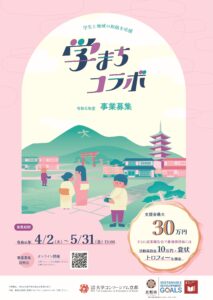

Reiwa 6th Academic Town Collaboration Project Application Guidelines

2. Target Organizations

An organization or group (*) of students from a university consortium Kyoto member university or junior college, with the majority of members being students and the representative being a student. If the program consists of students from more than one university, the majority of the students are students from a university consortium Kyoto member university or junior college.                                                  * University departments, laboratories, seminars, clubs, student circles (circles composed of students from multiple universities are also possible), etc.

< precautions>
As a general rule, only one project can be applied for from the same organization or group. If there are multiple applications, it may be adopted as a single project or rejected. In addition, even if the application is from another organization or group, if it is considered to be the same business, we will make a decision on how to handle it after confirming the purpose of the project and the necessary confirmation of the affiliated organizations.
* If you are unsure of your decision, please contact us. We will consider it according to the specific details of the application.

3. Target Businesses

With the aim of solving local issues and revitalizing the city of Kyoto, projects that are implemented in Kyoto City during the fiscal year and that meet the following requirements are eligible.
However, political activities, religious activities, activities that promote specific ideas, violent or destructive activities, commercial businesses, etc. are excluded.

【Requirements】
(1) Projects in which organizations and groups collaborate and collaborate with local communities (residents’ organizations, civic activity groups, businesses, etc., mainly in the Kyoto city area) and in which students take the initiative in their activities.                                                                                    

* For new businesses, those that can be expected to collaborate with the local community in the future are also acceptable.
Please contact us if you have not decided on a specific partner at the time of application.                                                        * Collaborative and collaborative projects are activities that collaborate with local organizations to tackle local issues and participate in and support the movements of local organizations.                                                                   * Administrative agencies may be included as collaborators, but cooperation with administrative agencies alone is not possible.
Examples: Health and welfare, social education, community development, promotion of academic, cultural, artistic or sports, environmental conservation,
Surveys and research in various fields such as community safety, citizen lectures, events, etc.

(2) Those who have not received any subsidies or subsidies from Kyoto City other than the Gakumachi Collaboration Project.

4. Amount and number of donations

Up to 300,000 yen / 10-15 cases

* At the results report meeting scheduled to be held in March of Reiwa 7, the implementing organization (1 organization) recognized as the most excellent will be commended (certificates, trophies, and activity incentives of 100,000 yen will be issued separately).

5. About the application

(1) Application period

Reiwa April 2 (Tue) ~ May 31 (Fri) 13:00
* Documents can only be submitted as data, and paper submission is not required.

(2) Reiwa 6 Business recruitment briefing session * Held online

Date: (1) Saturday, April 20, Reiwa 6, 14:00〜
(2) Thursday, May 9, Reiwa 6, 18:00〜
We also accept questions about how to write an application.

             

(3) How to apply

Step 1 Before You Start Writing Your Application

We recommend reading the master plan of the administrative district in which the activity will be carried out! In addition, please listen to the opinions of local people and related government agencies as much as possible regarding the background of the project implementation and the needs of the community. If you have any questions about the basic plan of the ward or points to keep in mind when working in the community, you can also consult with the Regional Power Promotion Office of each ward office or branch.
In addition to reconfirming and sharing your objectives and achievement goals, let’s discuss and think once again within the group whether the business content you are thinking about is the best way to achieve your objectives. In addition, for continuing projects, let’s thoroughly summarize the efforts made so far and organize the points for improvement and novelty so that they can be reflected in the application form.

Step 2 Let’s write an application!

< You can download the application form from the link below>
Reiwa 6 Recruitment Guidelines
Reiwa 6th year “Gakumachi Collaboration Project” application form (Microsoft Word)
Example of application entry

Points to fill in

★ Let’s check the judging criteria!
Let’s find out what criteria are used to judge the case.

★ What is the purpose of the business? Write down your purpose and local needs.
The group that listened to the opinions of local people and ward offices in step 1 should also write the contents.

★ Who are you working with (or planning to work with)? What is the role of each? Let’s be specific.
The Gakumachi Collaboration emphasizes learning that can be obtained by collaborating with the university, students, and the community toward the same goal. Let’s write carefully about what kind of role the partner will play.

If you have trouble writing application documents…
“It’s an event involving the elderly, but should I take measures against infectious diseases?”, “I want to set up an internet environment, but can I use the support money?” If you have any concerns or questions, please feel free to contact the University Consortium Kyoto. Consultations are also available by phone, email, and online.

Step 3 Register your business outline

Please use the form below to register your business overview.

 

Step 4 Submission of application documents

Please fill out the (1) application form (Microsoft WORD) downloaded in step 2 of this page during the application period, and (2) submit it together with reference data (if available) from the submission form below.
(1) Application document data (Microsoft WORD)
(2) Reference data (up to about 10 pages in A4 size) Please submit it as a PDF. * Only if there is one
* Submission of paper media is not required for both (1) and (2).


6. Main Schedule for the Future

Primary screening: After the application deadline ~ mid-June of Reiwa 6
Second screening (public presentation screening): Sunday, June 30, Reiwa 6 * Held at Campus Plaza Kyoto
Notification of support project decision and selection results: Mid-July of Reiwa 6
Certification ceremony and exchange meeting: Mid-July of Reiwa 6 * A certificate will be issued by Kyoto City for the certified project.
Interim report: Mid~end of October 6th year of Reiwa * Submission of documents
Final report: March 7, Reiwa * Submission of documents
Report: Mid ~ end of March 7th year of Reiwa

Inquiries

University Consortium Kyoto Gakumachi Collaboration Project
TEL :075-353-9130 FAX: 075-353-9101
MAIL:gakumachi-admin-ml■consortium.or.jp
(Please change ■ to @ and send)
〒600-8216 Shimogyo-ku, Kyoto-shi, Nishitoin-dori, Shiokoji, Shimo-ku, Kyoto, Campus Plaza Kyoto
* Reception hours: Tuesday ~ Saturday 9:00 ~ 17:00
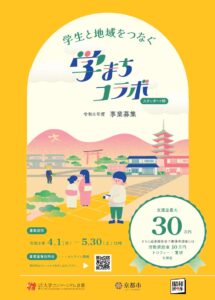

We will hold a report meeting on the results of the Reiwa 6th year “Gakumachi Collaboration Project”! !!

Kyoto City and the University Consortium Kyoto will hold a report meeting on the results of the “Gakumachi Collaboration Project (University Regional Collaboration Creation and Support Project)” in the Reiwa 6 to support efforts for regional revitalization implemented in collaboration between universities, students, and the local community.

At the debriefing session, the 12 organizations selected this year will look back on their activities so far and present the results of their efforts.
Why don’t you find new possibilities for collaboration between the university and the local community and hints for regional revitalization from the reports of accredited projects by students, such as regional development through the inheritance of local customs and culture?

Click here for an overview of the projects of the selected organizations ↓↓↓
Reiwa 6th Academic Town Collaboration Project Selected Organizations 


Reiwa 6th year “Learning Town Collaboration Project” results report meeting

Date & Time Thursday, March 20, Reiwa 7 11:00~17:00 (scheduled to end)
Venue Campus Plaza Kyoto 2nd Floor Hall
Flow of the day

11:00~ Opening session, presentation of results by Reiwa 6 selected organizations
*1 presentation @ 15 minutes (including questions and substitutions) 12 projects
15:30~ Opinion exchange and exchange meeting (*Participation is limited to selected organizations)
16:25~ Award Ceremony and Commentary
17:00 Closing (tentative)


* Please see here for the detailed schedule ↓↓↓
 Reiwa 6th Academic Town Collaboration Project Achievement Report Meeting Report Meeting Schedule  


Participation

・Application required
Please apply using the “Apply here” form below.

Participation Fee free


●Click here for information leaflets
Achievement Report Meeting Flyer  

●Click here for details on the contents of the Gakumachi Collaboration Project
https://www.consortium.or.jp/project/chiiki/gakumachi


We are accepting applications for participation during the period of March 4 (Tue) ~ March 19 (Wed) in the 7th year of Reiwa.
If you would like to participate, please apply using the application form below.


Inquiries and applications

Public Interest Incorporated Foundation University Consortium Kyoto Gakumachi Collaboration Project
TEL :075-353-9130 FAX: 075-353-9101
MAIL:gakumachi-admin-ml■consortium.or.jp
(Please change ■ to @ and send)
〒600-8216 Shimogyo-ku, Kyoto-shi, Nishitoin-dori, Shiokoji, Shimo-ku, Kyoto, Campus Plaza Kyoto
* Reception hours: Tuesday ~ Saturday 9:00 ~ 17:00
Reiwa 6th year Gakumachi collaboration project Initiative introduction

We will introduce the efforts of the Reiwa 6th year school town collaboration project.

The “Gakumachi Collaboration Project” is a “learning town collaboration project” in which universities and students and the local community collaborate to recruit and support projects and projects that work on urban development and regional revitalization in Kyoto.
We would like to inform you of the efforts of this year’s selected organizations!


【Activities】Kyoto Women’s University, Kyoto University, Ryukoku University “Student Group K-Bond”
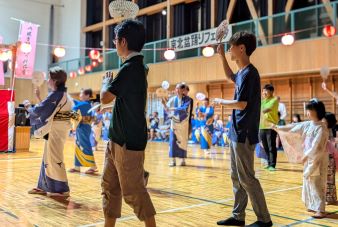
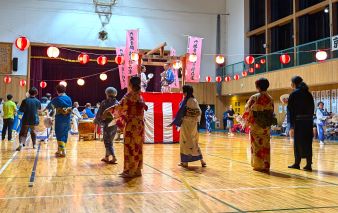
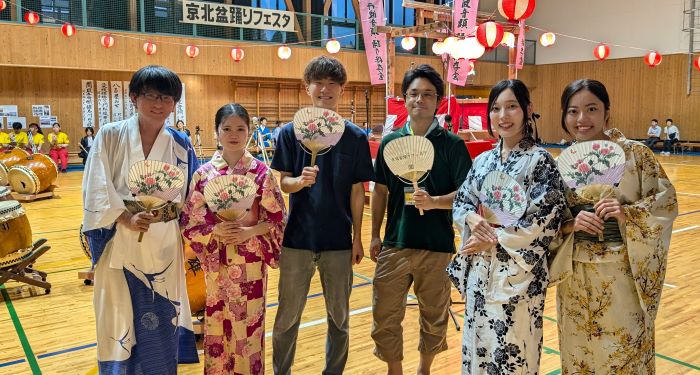
On Friday, August 16th, the “Keihoku Bon Odori Festa 2024“, a traditional summer event involving the student group K-Bond, was held, and we visited it!

This is the third year of the student organization K-Bond.
It is an organization consisting of students from Kyoto Women’s University, Ryukoku University, and Kyoto University.

Focusing on the situation where the number of Bon Odori performers is decreasing and is in danger of disappearing due to the rapidly declining birthrate and aging population in the Keihoku region, we are working with local residents to revitalize the area, preserve Bon Odori, and disseminate the appeal of Keihoku Bon Odori from a young perspective targeting young people.                                                The “Keihoku Bon Odori Festa” that we visited this time is held every year on August 16 to inherit Bon Odori, which is one of the cultures of Keihoku. Starting with Tamba Ondo, which is said to be “Joruri Kuzushi”, we will dance in Ondo, where the scenery and characteristics of each region such as Yamakuni, Yuge, Shuzan, and Utsu no Sato-Ondo are sung.
This year, about 12~13 students and working adults participated in the “Keihoku Bon Odori Festa” at the invitation of K-Bond, as well as members of other selected organizations who met at the exchange meeting of the Gakumachi Collaboration.
The gymnasium of the former Keihoku Daiichi Elementary School, the venue, was attended by many people, regardless of age or gender, and it was the first summer festival scene in a long time!

When I asked Mr. Nakano, a member of the student group K-Bond, about “interaction with local people,” he said,
“I regularly visit the Keihoku area, actively participate in Bon Odori practice, community gatherings and events, and enjoy my activities with the cooperation of many local people.

When the Bon Odori season is over, you will be introduced to the Bon Odori of Keihoku from a digital perspective, such as distributing it on YouTube and archiving the Bon Odori, as well as practicing Bon Odori and singing.

Please continue to work hard with the local people to convey the charm of Bon Odori in Keihoku!!


【Activities】Ritsumeikan University “Camo Cinema 19 Executive Committee”
On Saturday, August 24th, “Camo Cinema 19” was held at Aoi Park in Kamogawa, and I visited it!

The “Camo Cinema Executive Committee” is an organization that conducts cleanup activities and outdoor movie screenings on the riverbed of the Kamo River.
With the aim of instilling a long-term awareness of the beautification and conservation of the Kamo River among local residents, Kyoto residents, and young people, we have continued our activities to convey the charm of the Kamo River and create opportunities to protect it, and this year marks the 19th year.
It was established by volunteers from the Ritsumeikan University Advertising Research Group, and currently has about 40 members.

Speaking of “Camo Cinema”, last year it rained heavily before the movie screening, and the year before that, it rained heavily before the event, and this year as well, the clouds became suspicious from the evening, and it was about to rain, and lightning and thunder sounded, but somehow it ended safely without rain.

The following two events will be held before the outdoor film screening.
(1) Event for small children “Kamogawa de Play”
We asked clubs from other universities to exhibit various booths, such as a booth where children can enjoy and a booth where they can learn about the Kamo River, and about 50 people participated.

(2) Kamo River cleanup activity “Clean Hike”
This year, we focused on university students, and about 30 students (including several university staff and graduate students) participated in the cleanup activity together with volunteer groups in Kamogawa.

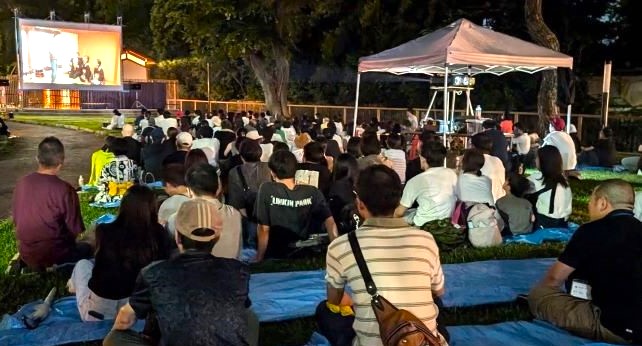
19:10 ~ “Outdoor movie screening” will be held.
This year, “River, Don’t Flow” produced by the theater company Europe was screened.
The film was decided on this film because it is set in Kifune in winter, it is set in Kyoto, it is very popular with the members of Camo Cinema, and it has a connection with the director and screenwriter of “River, Don’t Flow” last year.
In addition, there was also a strong desire from the leader Karibe to make the mood cool in the heat.
Audience members came one after another before the screening, and the seats that were prepared were filled up in no time! There were also families with small children and elderly couples. (There were about 300 visitors!) )
The Kifune in the middle of winter projected on the screen made me feel even cooler.

Through this interview, I was very impressed by the way all the members of Kamo Cinema worked together to promote the operation, and I learned that there is a lot of support behind the scenes, including volunteer groups in Kamogawa, Kyoto Prefecture, Kyoto City, and local restaurants. It was also impressive to see everyone watching over us warmly.

Please continue to do your best in the conservation activities of the Kamo River and activities to convey its charm!


【Activities】 Kyoto City University of Arts, Kyoto Seika University, Ryukoku University
『BORDER! Executive Committee”

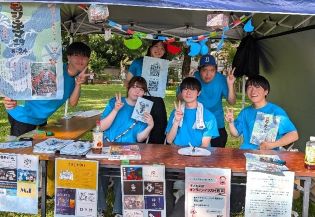
11/24 (Sun), BORDER!The event held by the executive committee “BORDER!Art Festival 2024“!

BORDER!The Executive Committee is made up of art students from the Kansai region, mainly Kyoto City University of Arts, and is responsible for planning, operating, and implementing art festivals.

The venue is “Demachi Masugata Shopping Street” in Kamigyo Ward.                                                                            On the day of the event, it was a cold day with light rain falling and stopping, but there was an arcade in the shopping street and a roof, so I was able to enjoy the event without feeling cold!                            In the past, many events were held outdoors and there were concerns about the weather, but this year they decided on the “Demachi Masugata Shopping Street” because it is a place with a roof and there are art-related shops such as records and used books. (Leader: Mr. Tsukahara)

Nearby, there is a shop famous for bean daifuku and a famous mackerel sushi shop in the shopping street, and it is a shopping street with a lot of traffic, but on this day, many people, regardless of age or gender, locals and tourists, were enjoying the event with art works that are not often seen.

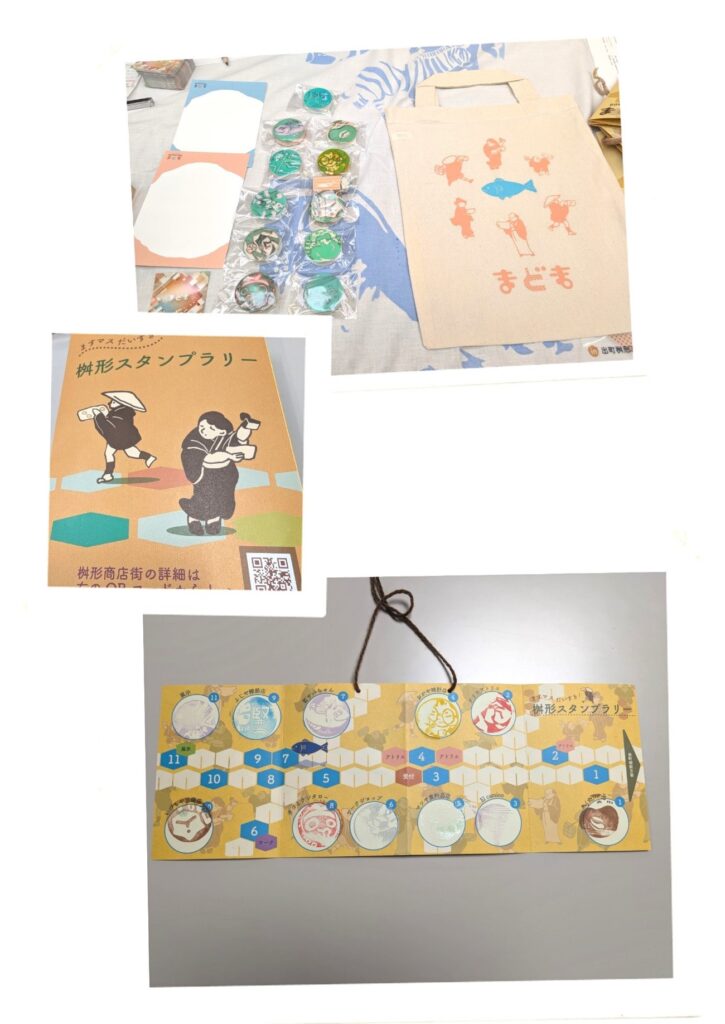
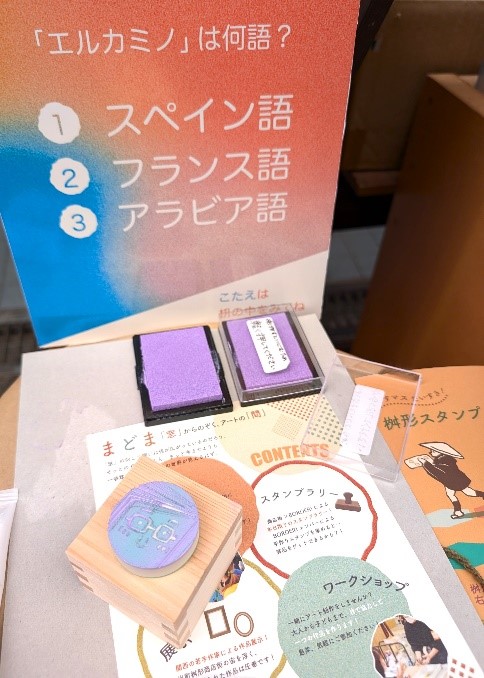
The theme of this year’s event is “Madoma”. The “in-between” of art peeking through the “window”.                                                             As the main event, a stamp rally will be held only on the day of the “Demachi Masugata Shopping Street ✕ BORDER! Art Festival”. Handmade stamps with the motif of shops in the shopping street were placed in front of the store, and if you collected all of them, you could win gift certificates and event goods that could be used in the shopping street.                                                            The handmade event goods were of high quality and all of them were cute goods that children would love!

Through the interview, BORDER!It was clear that the executive committee was working together with the people of the shopping district to hold the event. On the day of the event, the people of the shopping street were also working energetically together with the students, and I think that they contributed greatly to the revitalization of the shopping street.

In recent years, the decline of shopping streets has become a problem, but if there are more and more initiatives that lead to the revitalization of shopping streets and regional revitalization through collaboration between shopping streets and students… I think.

The event has ended, but the website of the event is wonderful every year, so please take a look!

     https://borderfes.art/


Reiwa 6th year Gakumachi collaboration project Initiative introduction

We will introduce the efforts of the Reiwa 6th year school town collaboration project.

The “Gakumachi Collaboration Project” is a “learning town collaboration project” in which universities and students and the local community collaborate to recruit and support projects and projects that work on urban development and regional revitalization in Kyoto.
We would like to inform you of the efforts of this year’s selected organizations!


【Activities】Kyoto Women’s University, Kyoto University, Ryukoku University “Student Group K-Bond”
On Friday, August 16th, the “Keihoku Bon Odori Festa 2024“, a traditional summer event involving the student group K-Bond, was held, and we visited it!

This is the third year of the student organization K-Bond.
It is an organization consisting of students from Kyoto Women’s University, Ryukoku University, and Kyoto University.

Focusing on the situation where the number of Bon Odori performers is decreasing and is in danger of disappearing due to the rapidly declining birthrate and aging population in the Keihoku region, we are working with local residents to revitalize the area, preserve Bon Odori, and disseminate the appeal of Keihoku Bon Odori from a young perspective targeting young people.                                                The “Keihoku Bon Odori Festa” that we visited this time is held every year on August 16 to inherit Bon Odori, which is one of the cultures of Keihoku. Starting with Tamba Ondo, which is said to be “Joruri Kuzushi”, we will dance in Ondo, where the scenery and characteristics of each region such as Yamakuni, Yuge, Shuzan, and Utsu no Sato-Ondo are sung.
This year, about 12~13 students and working adults participated in the “Keihoku Bon Odori Festa” at the invitation of K-Bond, as well as members of other selected organizations who met at the exchange meeting of the Gakumachi Collaboration.
The gymnasium of the former Keihoku Daiichi Elementary School, the venue, was attended by many people, regardless of age or gender, and it was the first summer festival scene in a long time!

When I asked Mr. Nakano, a member of the student group K-Bond, about “interaction with local people,” he said,
“I regularly visit the Keihoku area, actively participate in Bon Odori practice, community gatherings and events, and enjoy my activities with the cooperation of many local people.

When the Bon Odori season is over, you will be introduced to the Bon Odori of Keihoku from a digital perspective, such as distributing it on YouTube and archiving the Bon Odori, as well as practicing Bon Odori and singing.

Please continue to work hard with the local people to convey the charm of Bon Odori in Keihoku!!


【Activities】Ritsumeikan University “Camo Cinema 19 Executive Committee”
On Saturday, August 24th, “Camo Cinema 19” was held at Aoi Park in Kamogawa, and I visited it!

The “Camo Cinema Executive Committee” is an organization that conducts cleanup activities and outdoor movie screenings on the riverbed of the Kamo River.
With the aim of instilling a long-term awareness of the beautification and conservation of the Kamo River among local residents, Kyoto residents, and young people, we have continued our activities to convey the charm of the Kamo River and create opportunities to protect it, and this year marks the 19th year.
It was established by volunteers from the Ritsumeikan University Advertising Research Group, and currently has about 40 members.

Speaking of “Camo Cinema”, last year it rained heavily before the movie screening, and the year before that, it rained heavily before the event, and this year as well, the clouds became suspicious from the evening, and it was about to rain, and lightning and thunder sounded, but somehow it ended safely without rain.

The following two events will be held before the outdoor film screening.
(1) Event for small children “Kamogawa de Play”
We asked clubs from other universities to exhibit various booths, such as a booth where children can enjoy and a booth where they can learn about the Kamo River, and about 50 people participated.

(2) Kamo River cleanup activity “Clean Hike”
This year, we focused on university students, and about 30 students (including several university staff and graduate students) participated in the cleanup activity together with volunteer groups in Kamogawa.

19:10 ~ “Outdoor movie screening” will be held.
This year, “River, Don’t Flow” produced by the theater company Europe was screened.
The film was decided on this film because it is set in Kifune in winter, it is set in Kyoto, it is very popular with the members of Camo Cinema, and it has a connection with the director and screenwriter of “River, Don’t Flow” last year.
In addition, there was also a strong desire from the leader Karibe to make the mood cool in the heat.
Audience members came one after another before the screening, and the seats that were prepared were filled up in no time! There were also families with small children and elderly couples. (There were about 300 visitors!) )
The Kifune in the middle of winter projected on the screen made me feel even cooler.

Through this interview, I was very impressed by the way all the members of Kamo Cinema worked together to promote the operation, and I learned that there is a lot of support behind the scenes, including volunteer groups in Kamogawa, Kyoto Prefecture, Kyoto City, and local restaurants. It was also impressive to see everyone watching over us warmly.

Please continue to do your best in the conservation activities of the Kamo River and activities to convey its charm!


Reiwa 6th year Gakumachi collaboration project Initiative introduction

We will introduce the efforts of the Reiwa 6th year school town collaboration project.

The “Gakumachi Collaboration Project” is a “learning town collaboration project” in which universities and students and the local community collaborate to recruit and support projects and projects that work on urban development and regional revitalization in Kyoto.
We would like to inform you of the efforts of this year’s selected organizations!


【Activities】Kyoto Women’s University, Kyoto University, Ryukoku University “Student Group K-Bond”
On Friday, August 16th, the “Keihoku Bon Odori Festa 2024“, a traditional summer event involving the student group K-Bond, was held, and we visited it!

This is the third year of the student organization K-Bond.
It is an organization consisting of students from Kyoto Women’s University, Ryukoku University, and Kyoto University.

Focusing on the situation where the number of Bon Odori performers is decreasing and is in danger of disappearing due to the rapidly declining birthrate and aging population in the Keihoku region, we are working with local residents to revitalize the area, preserve Bon Odori, and disseminate the appeal of Keihoku Bon Odori from a young perspective targeting young people.                                                The “Keihoku Bon Odori Festa” that we visited this time is held every year on August 16 to inherit Bon Odori, which is one of the cultures of Keihoku. Starting with Tamba Ondo, which is said to be “Joruri Kuzushi”, we will dance in Ondo, where the scenery and characteristics of each region such as Yamakuni, Yuge, Shuzan, and Utsu no Sato-Ondo are sung.
This year, about 12~13 students and working adults participated in the “Keihoku Bon Odori Festa” at the invitation of K-Bond, as well as members of other selected organizations who met at the exchange meeting of the Gakumachi Collaboration.
The gymnasium of the former Keihoku Daiichi Elementary School, the venue, was attended by many people, regardless of age or gender, and it was the first summer festival scene in a long time!

When I asked Mr. Nakano, a member of the student group K-Bond, about “interaction with local people,” he said,
“I regularly visit the Keihoku area, actively participate in Bon Odori practice, community gatherings and events, and enjoy my activities with the cooperation of many local people.

When the Bon Odori season is over, you will be introduced to the Bon Odori of Keihoku from a digital perspective, such as distributing it on YouTube and archiving the Bon Odori, as well as practicing Bon Odori and singing.

Please continue to work hard with the local people to convey the charm of Bon Odori in Keihoku!!

We will hold a report meeting on the results of the Reiwa 5th year “Gakumachi Collaboration Project”! !!

Kyoto City and the University Consortium Kyoto will hold a report meeting on the results of the “Gakumachi Collaboration Project (University Regional Collaboration Creation and Support Project)” in the Reiwa 5 fiscal year to support efforts for regional revitalization implemented in collaboration between universities, students, and the local community.

At the debriefing session, the 11 organizations selected this year will look back on their activities so far and present the results of their efforts.
Why don’t you find new possibilities for collaboration between the university and the local community and hints for regional revitalization from the reports of accredited projects by students, such as regional development through the inheritance of local customs and culture?

Click here for an overview of the projects of the selected organizations ↓↓↓
Reiwa 5th Year Gakumachi Collaboration Project Selected Organization 


Reiwa 5th year “Learning Town Collaboration Project” results report meeting

Date & Time Wednesday, March 20, Reiwa 6 13:00~18:00 (scheduled to end)
Venue Campus Plaza Kyoto 2nd Floor Hall
Flow of the day

13:00~ Opening, presentation of results by Reiwa 5 adopted organizations
*1 presentation @ 15 minutes (including questions and substitutions) 11 projects
16:20~ Opinion exchange and exchange meeting (*Participation is only available to selected organizations)
17:20~ Award Ceremony and Commentary
18:00 Closing (tentative)


* Please see here for the detailed schedule ↓↓↓
 Reiwa 5th year school town collaboration project achievement report meeting report meeting schedule  


Participation

・Application required
Please apply using the “Apply here” form below.

Participation Fee free


●Click here for information leaflets
Achievement Debriefing Flyer  

●Click here for details on the contents of the Gakumachi Collaboration Project
https://www.consortium.or.jp/project/chiiki/gakumachi


We are accepting applications for participation during the period of March 1 (Friday) ~ March 16 (Saturday) in the 6th year of Reiwa.
If you would like to participate, please apply using the application form below.


Inquiries and applications

Public Interest Incorporated Foundation University Consortium Kyoto Gakumachi Collaboration Project
TEL :075-353-9130 FAX: 075-353-9101
MAIL:gakumachi-admin-ml■consortium.or.jp
(Please change ■ to @ and send)
〒600-8216 Shimogyo-ku, Kyoto-shi, Nishitoin-dori, Shiokoji, Shimo-ku, Kyoto, Campus Plaza Kyoto
* Reception hours: Tuesday ~ Saturday 9:00 ~ 17:00
Reiwa 5th Year Gakumachi Collaboration Project Gakumachi NEWS!

We will introduce the initiatives of the Reiwa 5th year school town collaboration project.

The “Gakumachi Collaboration Project” is a “learning town collaboration project” in which universities and students and the local community collaborate to recruit and support projects and projects that work on urban development and regional revitalization in Kyoto.
We would like to inform you of the efforts of this year’s selected organizations!

【Activities】 Doshisha University, Ritsumeikan University, etc. Kyoto Student Theater Festival Executive Committee

On Sunday, September 10th, we visited the Kyoto Student Theater Festival 2023!

Held in the same Yosho district of Sakyo Ward as last year, a special outdoor stage resembling a “chrysalis,” a symbol of the Kyoto Student Theater Festival, caught the attention of passers-by.

The Kyoto Student Theater Festival will be held for a long time from 9/9 (Sat) ~ 16 (Sat) (with one day off in between), and it is a large-scale event with 9 participating groups. Last year, a wide range of people came to see the play, but this year, which was the second year the event was held here, the audience seats were so full that it was impossible to sit due to the establishment of the venue and the level of publicity of the event.

The planning and management of such large-scale events is carried out entirely by students.                                              This time, a member of the Kyoto Student Public Relations Department wrote an article about the appeal of a student-led theater festival to the chairman of the Kyoto Student Theater Festival Executive Committee.

Please take a look at the interview article!!

Kyoto Student Public Relations Department Kotokare https://kotocollege.jp/archives/30303


【Activities】Otani University Otani University And House

On Wednesday, October 18th, we observed the activities of “Otani University And House”!

The main activity area is the Nakagawa School District, which is located in the northern part of Kita-ku, Kyoto City.                                      The Nakagawa School District is a production area of Kitayama cedar, but in recent years, it has become difficult to pass on the traditional forestry industry due to the aging of the population, and it is losing its vitality, so students are involved in the revitalization of the area. As one of our initiatives, we manufacture and sell craft beer “Kyoto Nakagawa Manma Bea!”

The “manmacha” used in beer is a tea that has been cultivated in the Nakagawa School District, but it is said to be close to the old type of tea, and it is a slightly bitter and flavorful tea.                                                 Manma tea is produced together with residents, and the subsequent beer production and sales are sold online and in stores with the cooperation of welfare offices.
This time, we visited Otani University to observe the process of attaching labels to bottles of “Manma Bea”.                        Leading up to this process, there is a work process of picking and sorting, steaming, and roasting manmacha, and then you are asked to brew it. According to Mr. Dehara of Otani University And House, the taste changes depending on how the tea is brewed, so it is difficult to keep the result consistent every year.

About 200 jars with labels (it was a long label!) It is a difficult task that requires patience, but when I saw that everyone worked together to make bottles with labels one after another, I felt the goodness of teamwork.                                I think the joy of having something we have created become a product and sold in stores is great.

Through the purchase of beer, the price of the tea leaves will be returned to the community welfare activities in the Nakagawa area. Otani University And House also conducts monthly activities to interact with residents, such as quizzes and brain training.

I’m looking forward to the sale of “Manma Bea” again this year! The taste is that the taste of tea spreads softly at the beginning, and the bitterness of beer is less. It seems to be easy for women to drink.

*For more information on Otani University And House’s activities, please check the Instagram below!!

  https://www.instagram.com/otaniandhouse/


Kyoto Seika University “City, People and Music” Seminar

10/21 (Sat) I visited the [Ichijoji Fest Autumn Festival] where the seminar “City, People and Music” seminar will hold a workshop!

Speaking of Ichijoji Temple,

・ The image of “ramen” is too strong, and other attractions are not conveyed.

There is a temperature difference between long-time residents and newly moved residents.

This issue emerged from a questionnaire targeting shopkeepers at Ichijoji Temple.                                                        We want to solve such problems and revitalize regional exchanges! In addition to this, we decided to hold the workshop because we wanted to promote exchange with the local community by having people come into contact with music, taking advantage of the strengths of the “City, People and Music” seminar, where there are many students majoring in musical expression.

On the day of the event, it was a refreshing autumn sun, and the venue was Ichijoji Park, which was crowded with people from Mr./Ms. from the morning. There were a lot of food stalls, fair-day corners, stage events, workshop events, etc., and many families with small children came Mr./Ms.. According to the organizers, the number of visitors was about 3,000.

In the workshop “Fun to make and play with sound” in the seminar “City, People and Music,” the participants were asked to make four types of musical instruments (a kalimba made from hairpins, a flute made from straws, a bracelet made with beads in a tube, and a drum made from paper tubes and balloons) and enjoyed playing with sound with the instruments, which was a great success with parents and children who enjoyed playing musical instruments.                                              In order to prevent children from getting injured or accidentally ingested by the instrument, and to make it easier to make, the material, shape, size, etc. were repeated many times. Thanks to such efforts, when I was interviewing the representative Mr./Ms. Ogawa on the day of the workshop, children visited the workshop one after another, and it was so successful that the interview was interrupted each time.

In addition to holding workshops, the seminar on “City, People, and Music” also participates in garbage picking activities at Ichijoji Temple. Therefore, he said that he is deepening exchanges with local people.

Please continue to do your best to revitalize Ichijoji Temple!!


【Activities】Kyoto City University of Arts, Kyoto Seika University BORDER! Executive Committee

On Saturday, November 25th, I went to the art festival “BORDER!2023“!

This year’s venue is Rissei Garden Hulic Kyoto (formerly Kyoto Municipal Takakura Elementary School).                                   It was held near the Takase River in Shijo.

BORDER!The Executive Committee, whose members are mainly art university students in the Kansai region, plans, operates, and implements art festivals with the main objectives of creating opportunities for citizens to come into contact with art and fostering young artists.

This year’s live paint was double the number of installations last year, making it a sight to behold. In addition, for the first time in a long time, a kitchen car was arranged, a space for eating and drinking was prepared, and the marche, which was mainly Mr./Ms. students, was crowded with many people.                                             The artist of the live painting was commissioned by a student of an art university in Kyoto Prefecture, Mr./Ms.! It was truly a sight to behold as he completed the painting on a canvas that was taller than his own height in four hours.                                                               On the morning of the day, the weather was not favorable, and it rained on and off repeatedly, and it seems that the cancellation of the live event was considered, but it was decided somehow, and all the painters Mr./Ms. wore raincoats and did their best to draw. It was impressive that a bottle was placed in front of the painting so that you could throw money to the picture that you felt was wonderful.

In the participatory art, acrylic sheets that were scheduled to be discarded during the Corona disaster were collected and reused as canvases. Children were happily drawing pictures on the large acrylic board, and many families with children could be seen. Around the acrylic plate, cardboard art works of unique animals are displayed, and BORDER!It seems that it was created at an event held at the Kitaoji Aeon Mall led by the team.

Many of the website designs and posters for venue information are also tasteful, and I felt that they were truly a creator group.

We look forward to more events in the future where you can get close to art!

For more information on BORDER!’s activities, please visit the following website.

https://borderfes.art/


【Activities】Ryukoku University, Hanazono University, Kyoto Women’s University, etc.

On Saturday, December 9th, in the Kamishichiken and Daikokucho areas of Kamigyo-ku, the “Miyako Light” light-up event was held for Kyomachiya, which aims to preserve traditional techniques and culture for the future, and we visited it! This is the second interview following last year’s interview.

This year marks the 19th year of the Miyako Light program, and the executive committee consists of 15 university students from Kyoto and Osaka. While many organizations are struggling to recruit members, when I asked the representative, Mr./Ms. Otaka, how they recruit members, he replied that they analyze the characteristics of each SNS and use it appropriately for recruitment. I didn’t know that it was analyzed so closely, and I was able to learn more about the approach to the event through the interviews.

At the actual event, due to the easing of Corona regulations, there were events that everyone could enjoy, regardless of age or gender, such as the sale of event-limited “Miyako Light Original Cake” in collaboration with local shops, an exhibition of milk carton lanterns created with local children, and a photo rally event, and it was impressive that there were more families than last year. In addition, the members of Miyako Light thought about the sounds reminiscent of machiya, recorded the voices of children in the area and the sounds of looms, etc., and incorporated them into the music. At the event venue, music with a relaxation effect was played to match the illumination.

In addition, from this year, the executive committee members of the event wore matching jumpers so that they could be easily recognized. I was able to feel the consideration given to making it easier for local residents and participants to talk to me, and the unity of the team.

Every year, with the cooperation of the shops and local residents, I am impressed that such a large-scale event is held by students alone. It was a relaxing event where you could feel the warmth as well as the wonderful lighting. You can also take photos that look good on SNS Mr./Ms.!

This year’s event has come to an end, but please take a look at the activities of “Miyako Light” on the following site!

http://miyako-light.anewal.net/

https://www.instagram.com/miyako.light/

https://twitter.com/i/flow/login?redirect_after_login=%2Fmiyako_light