



11/17 (Mon) & 12/15 (Mon) “New Project” University Education Power-up Seminar will be held!

As part of the rank-based training program in the FD project, the University Consortium Kyoto will hold a new seminar “University Education Power-up Seminar” for a wide range of university officials.

This program was planned as a seminar to support the educational (educational support) activities of individual university faculty and staff. This year, the common theme is “Thinking about Imadoki Students” and will be held in two sessions. Why don’t you learn about the environment, characteristics, and issues of today’s students and make use of them in your daily education (educational support) activities?

Power-up Seminars

Outline of the event

Venue Ikebo Junior College, Senshinkan, 6th floor, Conference Room 1
Organizer University Consortium Kyoto
Target University faculty members and university officials who are interested in educational activities at the university
Participation Fee Member Universities free
Non-Member Universities ¥1,000 (please pay at the reception on the day)
Occupancy 40 people each time

Lecture 1 “The Reality of Student Learning: Thinking from the Connection with High School Education”

Date Monday, November 17, 2014 18:00~20:00 (Reception starts at 17:30)
Lecturer Hiroshi Kakumoto (Lecturer, Ritsumeikan University, Former Director of the Center for Connected Education)
Application Deadline Friday, November 14, 2014

Lecture 2 “Students and Internet Literacy: The Reality of Smartphone and SNS Use”

Date Monday, December 15, 2014 18:00~20:00 (Reception starts at 17:30)
Lecturer Masayuki Murakami (Associate Professor, Kyoto University of Foreign Studies)
Application Deadline Friday, December 12, 2014


How to apply: E-mail application

Describe the following contents,
Please apply to fdrd■consortium.or.jp. (Please replace ■ with @.) )

Subject: Power-up seminar application
Full text: (1) Participation (2) Name (3) Name of university affiliation (4) Faculty and staff (5) E-mail address


Click here for details

Inquiries

University Consortium Kyoto FD Project
TEL 075-353-9122 FAX 075-353-9101
〒600-8216 Shimogyo-ku, Kyoto-shi, Nishitoin-dori, Shiokoji, Shimo-ku, Kyoto, Campus Plaza Kyoto
* Reception hours: Tuesday ~ Saturday 9:00 ~ 17:00 (excluding year-end and New Year holidays)
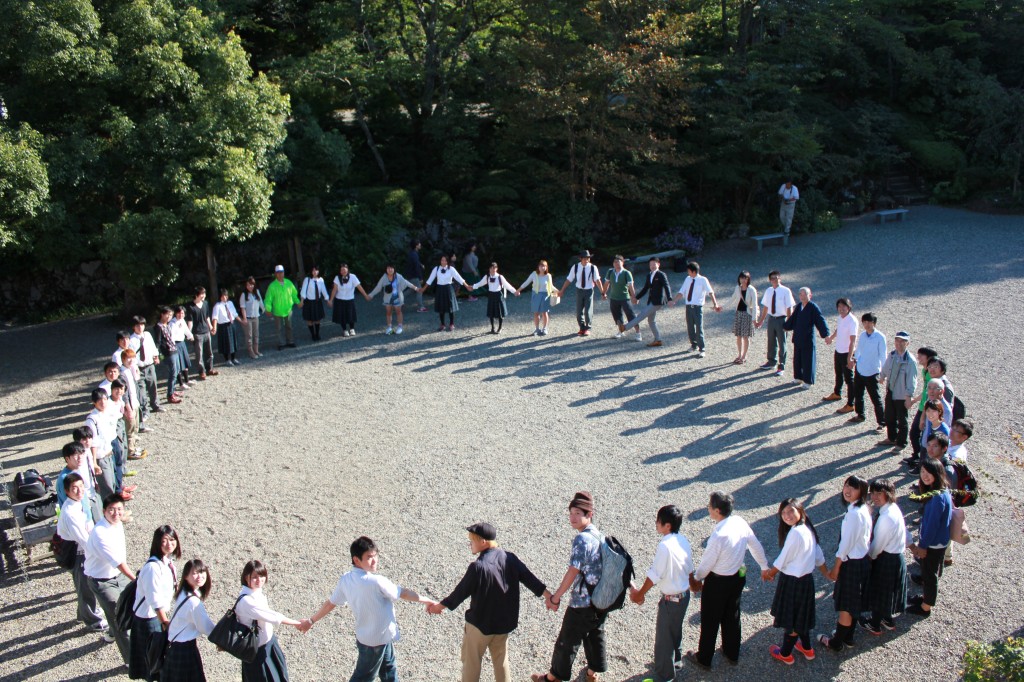
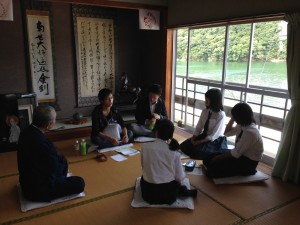
Results of the Northern Kyoto Prefecture Career Education Project “Maruttoku in Kumihama”

gist

High school students in the northern region of Kyoto Prefecture have fewer opportunities to learn about universities and interact with current university students than high school students in urban areas because there are no universities located nearby.
In addition, there are few opportunities to experience local history and culture and talk at length with people who work in the local area, and many young people graduate from high school without having an image of working and living in their hometown as adults, move to urban areas after graduating from high school, and start their careers as members of society in other areas after graduating from university.

Therefore, the Kyoto High School-University Collaborative Research Council held a workshop “Maruttoku in Kumihama” by high school students, university students, and local residents in Kumihama-cho, Kyotango City, with the aim of developing the careers of high school students in the northern region of Kyoto Prefecture and fostering human resources who will support the community.

Outline of Implementation

schedule Saturday, September 20, 2014 11:00~16:00
place Gosho Inaba Honke, Nyoiji Temple (Kumihama-cho, Kyotango City)
sponsorship Kyoto High School-University Collaborative Research Council (Kyoto Prefectural Board of Education, Kyoto City Board of Education, Kyoto Prefectural Federation of Private Junior and Senior High Schools, Kyoto Chamber of Commerce and Industry, University Consortium Kyoto)
cooperation Kyoto Prefecture Northern Regional and University Cooperation Organization
participant High School Students 25 (1st and 2nd year students at Kyoto Prefectural Kumihama High School)
university student 19 (Kyoto Seika University, Doshisha University, Ritsumeikan University, Kyoto Bunkyo University, Ryukoku University, Kobe University, Waseda Graduate School, etc.)
working adult 8 people (NPO Exciting Kumihama Creation Association, Kyotango City Kumihama Citizen’s Bureau)

Implementation Report

The university students entered Kumihama the day before to inspect the site and rehearsed carefully until late at night, and on the day of the event, the rain from the previous day had stopped and the weather was clear, and we were able to welcome the performance in a refreshing and sunny atmosphere.
The high school students gradually became more relaxed and relaxed as they walked around the city and did group work with university students and local residents. At first, some of the students were too shy to speak well, but at the end, they were willing to speak up about their dreams and career paths. During the dialogue time, I was very impressed by the friendly advice between university students and local people about the concerns of high school students.

 IMG_5717    IMG_5555

Through this workshop, the high school students had the opportunity to reflect on themselves and think deeply about their own way of life, as well as to reaffirm the good points of Kumihama, and the university students were able to gain new insights about themselves by reflecting on their careers and communicating them with others. We also received comments from local residents, such as, “Conveying the charm of the region to young people, listening to their thoughts on the region and their thoughts on the future, and gaining new awareness and discoveries about the local area,” making it a meaningful initiative for high school students, university students, and local residents.

In addition, this project was blessed with a good location, not to mention the wealthy merchant Inaba Honke, the building and garden were wonderful, and the view of the sea from Nyoiji Temple near Kumihama Bay was the best. I believe that one of the factors for our success was that we were able to work in a calm space such as a Japanese-style room, and that we were able to interact in nature, such as the blue sea, the wide sky, and the lush garden.

While referring to the results of this survey, we would like to implement such projects in other regions as well.

Same-day time schedule

11:00-11:30 ◆ Start of planning ◆ -Orientation at the main house of the Australian merchant Inaba
11:30-11:55 Walking around the town (guided by an NPO)
11:55-12:10 Arrival at Nyoiji Temple-Local story by Priest Tomomatsu
12:10-13:00 lunch
13:00-13:15 Presentation by university students (about actual experiences such as setbacks and encounters at university)
13:15-15:00 Dialogue interview (high school students× university students× local residents) near Nyoiji Temple
15:00-15:30 Conclusion – Time Machine Letter Creation (Letter to Yourself 3 Years Later) – Overall Review
16:00 ◆ End of project ◆


Contact us

University Consortium Kyoto, High School-University Collaborative Career Education Program
TEL 075-353-9153 FAX 075-353-9101
〒600-8216 Shimogyo-ku, Kyoto-shi, Nishitoin-dori, Shiokoji, Shimo-ku, Kyoto, Campus Plaza Kyoto
* Reception hours: Tuesday ~ Saturday 9:00 ~ 17:00 (excluding year-end and New Year holidays)
October 11 (Sat) IELTS Preparation Course (Free) Advanced!

Outline of the event

IELTS Briefing & Preparation Course for English Exam for Study Abroad!
The popular IELTS free course will be held on Saturday, October 11 as an advanced course.

Instructors who are familiar with the exam will explain and guide you on the tendency of the questions and how to study them using examples from each module. Take this opportunity to learn skills that are difficult to acquire through self-study and effective countermeasures!

IELTS
Click here for details
Date & Time Saturday, October 11, 2014 9:30~17:00 (with lunch break)
Venue Campus Plaza Kyoto, 4th Floor, Conference Room 3
Target Students enrolled in a university consortium Kyoto member university or junior college
Participation Fee free
Contents Trends in the four skills required for the IELTS test and how to prepare for them
level Advanced class.
Those who have taken a basic class or have an IELTS band score of 5.5 or higher.
* Approximate: Eiken Pre-1 or higher, or TOEFL iBT 80 or higher
Application Period Thursday, September 18, 2014 ~ Wednesday, October 8, 2014, 4:30 p.m.
Lecturer Native Instructor
Occupancy 50

*If you are interested in participating, please follow the steps below to apply by 16:30 on Wednesday, October 8th.

Application Process

Step 1 Application

Please apply for the countermeasure course from the application form. (Input items are name, e-mail address, student ID number , etc.)

button07_moushikomi_04

Step 2 Check the auto-reply email

After applying, you will receive an automatic reply from support-kokusai eiken.or.jp confirming the completion of your application.

Step 3 Print the email and exchange it with text

Please print out the email you received and bring it with you on the day of the course. You will need it to exchange texts.

About IELTS

IELTS (International English Language Testing System) is recognised by almost all higher education institutions in the UK, Australia, Canada and New Zealand. In the United States, it is recognized by nearly 3,000 universities and programs as an alternative to the TOEFL.

Inquiries

◎ IELTS Secretariat of the Japan English Language Assessment Association (in charge: Taira, Minamino)
Business days: Weekdays 9:30~17:30
TEL: 06-6455-6286 E-mail: support-kokusai[at]eiken.or.jp
*Please specify the name of the university when making inquiries. ◎University Consortium Kyoto, Educational Development Division, International Liaison SectionTEL
: 075-353-9164 E-mail: kcai-office[at]consortium.or.jp


For university students and junior college students nationwide! 23 Cultural Facilities Offer Free Admission to “Student Days”

Kyoto City is currently home to 38 universities and junior colleges, and is home to approximately 150,000 students, or about 10% of the population.

In order to provide opportunities for students to come into contact with and collaborate with Kyoto, as part of the promotion measures in the “University City Kyoto and Student City Kyoto Promotion Plan” formulated by Kyoto City and the University Consortium Kyoto in April 26, the 12th Kyoto Student Festival will be held for four days, including the day of the 12th Kyoto Student Festival. We invite all university and junior college students from all over the world to Mr./Ms. free of charge to cultural facilities in Kyoto.

This year, the number of eligible facilities has been expanded to 23 (compared to 21 last year), and the leaflet introduces the highlights of the internship program at Kyoto City Hall, which is developed as a project of the University Consortium Kyoto. Mr./Ms. students from all over the country, please take this opportunity to visit our cultural facilities in Kyoto!

student.days

Implementation Period

Friday, October 10, 2014 ~ Monday, October 13, 2014 (4 days)

*Otani University Museum only from October 11 (Sat) ~ 18 (Sat) (*Closed on 13 (Mon) / Holiday)
* Some facilities may be closed during the implementation period.

Eligibility

Students enrolled in universities and junior colleges nationwide

How to use

Please present your student ID card at the entrance of the participating facility

* No pre-registration required
* Depending on the facility, there may be special exhibitions and other contents that cannot be entered for free.
* Please check the leaflet for details.

Target Facilities

23 facilities *The underlined areas are facilities that have newly participated this year.

Name of Eligible Facility
Kyoto City Related Facilities Kyoto City School History Museum, Kyoto City Zoo, Kyoto Kaleidoscope Museum, Mu Yan, Nijo Castle
Kyoto Prefecture Related Facilities Kyoto Prefectural Botanical Garden, Kyoto Prefectural Ceramic Painting Garden, The Museum of Kyoto
Country-Related Facilities The National Museum of Modern Art, Kyoto, Kyoto National Museum
University-Related Facilities Otani University Museum, Kyoto Institute of Technology Museum of Arts and Crafts, Kyoto University Museum, Ritsumeikan University Museum for International Peace, Ryukoku University Ryukoku Museum, Kyoto Saga University of the Arts, Kyoto Sangyo University (Gallery, Kamiyama Observatory), Kyoto City University of Arts (Art Museum, Japan Research Center for Traditional Music, Gallery @KCUA (Aqua)),Doshisha Gallery, Harris Science Museum, Doshisha University, Hanazono University Museum of History

Closed days of each facility

Name of Eligible Facility Closed days during the period
Otani University Museum October 10 (Fri), 13 (Mon)
Kyoto University Museum October 13 (Mon)
Kyoto Saga University of the Arts Museum October 12 (Sun)
Kyoto Sangyo University Gallery October 12 (Sun), 13 (Mon)
Kamiyama Observatory, Kyoto Sangyo University October 12 (Sun)
Research Center for Japan Traditional Music, Kyoto City University of Arts October 11 (Sat), 12 (Sun), 13 (Mon)
Doshisha University Harris Science and Chemistry Museum Doshisha Gallery October 12 (Sun), 13 (Mon)
Hanazono University Museum of History October 12 (Sun)

Publicity materials

2014 “StudentDays” leafletPDF
2014 “Student Days” PosterPDF

Kyoto City Information Center Address http://www.city.kyoto.lg.jp/sogo/page/0000172112.html

Inquiries

Call Kyoto Anytime

TEL  075-661-3755 FAX 075-661-5855
E-mail http://www.city.kyoto.lg.jp/sogo/page/0000012821.html
* Reception hours: Open all year round 8 a.m. ~ 9 p.m.


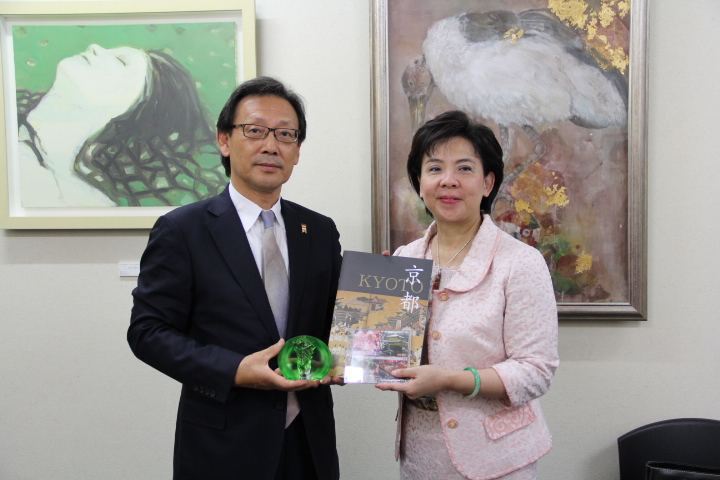
There was a courtesy visit from the International Cooperation Foundation for Higher Education in Taiwan

 
On Wednesday, October 8, Mr. Jiayi Zhang, President of Tamkang University, President of the International Cooperation Foundation for Higher Education (FICHET) in Taiwan, paid a courtesy visit to Mr. Tetsuma Akamatsu, President of the University Consortium Kyoto (Representative Secretary of the National Council of University Consortiums and President of Ryukoku University).

FICHET is a Taiwanese consortium established in Taiwan in 2006 and currently has 118 member schools and is engaged in various activities in the field of higher education in Taiwan, including international collaboration. During this visit, discussions were held to promote international education in Japan and Taiwan in cooperation with the National University Consortium Council. Among them, it was confirmed that Japan and Taiwan will cooperate in public relations to attract international students to each other.

In addition, Kyoto universities and the University Consortium Kyoto are scheduled to participate in the study abroad fair hosted by Kyoto City in Taiwan in December this year, and an agreement was reached to establish a cooperative system at that time.


International Cooperation Foundation for Higher EducationClick here for details


IMG_0213                                                                                                                                    
  
   IMG_0200 IMG_0223

Contact us

Secretariat of the National Council of University Consortiums (University Consortium Kyoto)
TEL 075-353-9100 FAX 075-353-9101
〒600-8216 Shimogyo-ku, Kyoto-shi, Nishitoin-dori, Shiokoji, Shimo-ku, Kyoto, Campus Plaza Kyoto
* Reception hours: Tuesday ~ Saturday 9:00 ~ 17:00 (excluding year-end and New Year holidays)

The 2013 “Future Kyoto Creative Research Project” Research Report has been published!

We are pleased to announce that we have published a research report for the 2013 Academic Year of the “Future Kyoto Creation Research Project,” which will be conducted in cooperation with university researchers and the department in charge of Kyoto City in order to create policies for the creation of the future Kyoto by utilizing the accumulated “knowledge” of “University City Kyoto.”thinktank


FY2013 Research Results Report on the Future of Kyoto Creation Research ProjectPDF data


FY2013 Research Results Report

*The title of the principal investigator and the name of the research cooperating department are as of the time of adoption.

Designated Assignment
The role of biodiversity conservation in Kyoto’s unique attractions, such as its traditions, culture, and tourism, and measures needed in the future

Research Themes Knowledge of the symbiosis of the natural environment in the lives of citizens and evaluation of the actual conditions of familiar biota
Principal Investigator Professor, Graduate School of Global Environmental Studies, Kyoto University
Research Summary The knowledge of coexistence with the natural environment and the actual state of the biota around us, which have been nurtured in the lives of citizens, are presented through household surveys in the Shirakawa River system, field surveys at the Shirakawa Children’s Festival, questionnaires to temples and shrines on wildlife trends, field surveys of forest vegetation damage (mainly caused by deer), and surveys of townhouse gardens. Based on this, we proposed the creation of a support framework between departments in charge of the government and in cooperation with citizens so that efforts to coexist with the natural environment that take root in the lives of citizens will lead to the creation of an attractive city that is unique to Kyoto.
Research Cooperation Environmental Management Division, Environmental Planning Department, Environmental Policy Bureau, Kyoto City
Research Reports Research Report


Designated Assignment
Conditions for the Success of Social Business and Necessary Measures ~From the Perspective of Supporting Small and Medium-sized Enterprises~

Research Themes Empirical Research on the Development and Dissemination of Social Business Using Student Participatory Business Competitions
Principal Investigator Associate Professor, Faculty of Business Administration, Kyoto Sangyo University, Mr. Etsuga Omuro
Research Summary With the cooperation of companies that manufacture and sell social products, a competition was held over a period of about 100 days in which students made proposals for their development and dissemination, and the changes in students’ own perceptions and behaviors before and after participation were investigated. Based on the results, we showed that being involved in social business may lead to the development of socially oriented consumers, and proposed the enhancement of socially oriented consumer education for younger people (high school students, etc.) and the creation of an environment that makes it easy to start a business.
Research Cooperation Kyoto City Industry and Tourism Bureau, Commerce and Industry Department, Commercial Promotion Division
Research Reports Research Report


Free Assignment

Research Themes Urban planning issues for narrow streets adjacent to main roads
~Toward the Maintenance and Conservation of “Historic Narrow Streets”~
Principal Investigator Graduate School of Engineering, Kyoto University Researcher Sachiko Morishige
Research Summary Through a survey of the situation of narrow streets in the so-called “Tanogata district,” we grasped its characteristics and issues. We proposed measures such as urban planning regulations for high-rise buildings facing narrow streets, clarification of the handling of cul-de-sacs that are “non-roads” under the Building Standards Act, guidance for the installation of emergency evacuation exits, and creation of rules to adjust the relationship between narrow streets and high-rise buildings.
Research Cooperation Kyoto City City Planning Bureau, Urban Planning Department, Urban Development Promotion Division
Kyoto City City Planning Bureau, Building Guidance Department, Architectural Guidance Division
City Planning Division, Urban Planning Department, Kyoto City City Planning Bureau
Research Reports Research Report

Free Assignment

Research Themes Analysis of new segments and their characteristics in the kimono-related market
Principal Investigator Associate Professor, Faculty of Business Administration, Ritsumeikan University Mitsuri Yoshida
Research Summary Through interviews with kimono-related businesses on the appeal of kimono and questionnaire surveys of people who wear kimonos on a regular basis, we organized the problem structure of “kimono banare” and proposed support measures to improve consumer knowledge and the spread of opportunities to wear kimono on a daily basis.
Research Cooperation Kyoto City Industry and Tourism Bureau, Commerce and Industry Department, Traditional Industry Division
Research Reports Research Report


University Consortium Kyoto Think Tank Project
TEL 075-708-5803 FAX 075-353-9101
〒600-8216 Shimogyo-ku, Kyoto-shi, Nishitoin-dori, Shiokoji, Shimo-ku, Kyoto, Campus Plaza Kyoto
* Business hours: Tuesday ~ Saturday 9:00 ~ 17:00 (excluding year-end and New Year holidays)

The 17th Kyoto International Student Film Festival Competition Finalists Announcement of Results

Kyoto International Student Film Festival, Competition

Japan’s largest international student film festival is celebrating its 17th year this year. Films and video works are solicited and judged from students in Japan and around the world, and the winning films are screened at the festival held every autumn.
This year, 350 entries from all over the world have gathered. The winning works were decided based on a rigorous examination by the executive committee. We will be announcing 5 selected works in the feature film category and 6 films in the short film category!

There are winning Films that are showing on our festival !

gazou

Number of entries in 2014
―The number of the films submitted to the competition2014 ―

JAPAN OVERSEAS Total Total
Short 79 137 216
Feature Length Feature 84 50 134
Total Total 163 187 350

Submission period

Monday, March 10, 2014 ~ Friday, May 16, 2014

List of Selected Films (11 Films) -Introduction of the winning films-

■Feature Film Section: 5 films in total -Feature Film Section-

“See you tomorrow” (49min)
Directed by : Toshihiro Soh

(Japan : Musashino Art University)


“Why did Komura shed tears with a straight face?” (63min)
Directed by : Keisuke Kondo , Yoshihiro Nagata , Ken Ninomiya

(Japan : Osaka University of Arts)


“Okinawa/Yamato” (98min)
Directed by : Kenta Higa

(Japan : Wako University)


“Albert” (27min)
Directed by : Daniel Wawrzyniak

(Poland : The Polish National Film, Television and Theatre School)

“Salvation” (30min)
Directed by : Mark Gerstorfer
(Austria : Filmacademy Vienna)


katinko0

Short Film Section-

“Yellow Balloon and Ban no Sensei” (4min)
Directed by : Yoko Yuki

(Japan : Tokyo University of the Arts)


“BERLIN TROIKA” (10min)
Directed by : Andrej Gontcharo

(Germany : German Film and Television Academy)


“LOTHAR” (13min)
Directed by : Luca Zuberbühler

(Germany : Zürcher Hochschule der Künste ZHdK Bachelor Of Arts in Film)


“Born with it” (14min)
Directed by : Emmanuel Osei-Kuffour

(USA : New York University)


“Celery” (15min)
Directed by : Pedro Collantes

(Spain : Nederlandse Filmacademie)


“Ketchup Kid” (19min)
Directed by : Patrick Vollrath

(Poland : Filmacademy Vienna)

katinko0

The 2014 Grand Prize winner will be decided from these 11 works!
The Grand Prize winner is the final film of the 17th Kyoto International Student Film Festival
It’s
the day
Announced at the award ceremony at Kyoto Cinema on Friday, November 28th!
Please look forward to!

Information on the festival will be released on the official website at any time.


Contact us


The 17th Kyoto International Student Film Festival Executive Committee
〒600-8216 Kyoto-shi, Shimogyo-ku, Nishitoin-dori, Shiokoji Shimoru Campus Plaza Kyoto 6F
TEL:075-353-9430 FAX:075-353-9101
MAIL: info.2014 at kisfvf.com
twitter:@kisfvf
Web: http://www.kisfvf.com

Research is underway! ~Future Kyoto Creative Research Project: From the Field of Surveys and Research~

Each of the survey and research themes adopted in the 2014 “Future Kyoto Creative Research Project” is working toward unknown results. We will introduce the state of the site!


Future Kyoto Creation Research Project Survey and Research Themes in FY2014Click here for details


Report Publishing

Conducting on-site surveys in municipal housing –
Freedom Project 1 “Spatial Composition and Transition in Municipal Housing and Surrounding Residential Areas in the Suburbs of Kyoto City”

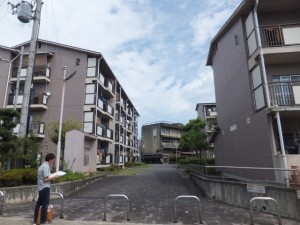
In this survey and research theme, in collaboration with the Kyoto City Housing and Community Development Division, we are trying to clarify the relationship between municipal housing in the suburbs of the city’s 99 housing complexes and the surrounding area from (1) the exterior of the buildings bordering the housing complex, (2) the use of open space in the housing complex, and (3) the situation of the site boundary. The results of the survey are expected to be used in the development and reorganization of municipal housing in the future.

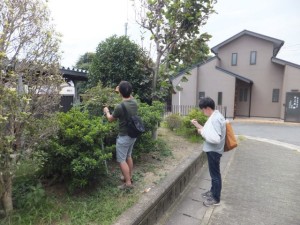
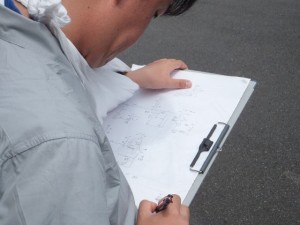
On September 17, the principal investigator, Mr./Ms. Masaki, a doctoral student at Kyoto Institute of Technology, conducted a third on-site survey at a municipal housing complex in Yamashina Ward. (The past two meetings were held in Yamashina Ward and Fushimi Ward in August.)

Measure the height and depth of the planting.

Measure the height and depth of the planting.

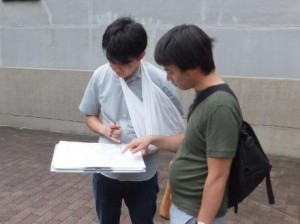
On the left is Mr./Ms. Masaki, the principal investigator, and on the right is Mr./Ms. Inagaki, a collaborator.

On the left is Mr./Ms. Masaki, the principal investigator, and on the right is Mr./Ms. Inagaki, a collaborator.


In order to clarify the relationship between municipal housing and the surrounding area, we will take photographs of the boundary between the local municipal housing site and the road and the site, and carefully record the dimensions and the width of the adjacent road.
We will also check the state of the open space on the site and the status of entrances and exits outside the site.

It is also important to know what the entrance, which is the boundary between municipal housing and the local area, looks like.

It is also important to know what the entrance, which is the boundary between municipal housing and the local area, looks like.

I will carefully drop it into the diagram.

I will carefully drop it into the diagram.


By analyzing the results of these surveys on multiple municipal housing projects and materials on the transition of municipal housing, and deciphering the characteristics of the local environment around municipal housing, it will be useful for considering the consolidation of municipal housing stock in the future. In fact, the results of such a survey were unlikely to occur before.


Experiments in creating the future start in the tea room –
Designated Topic (2) “Creating a Place for Exchange in the Inner City Area”

In this survey and research theme, we will conduct empirical research to foster and network the formation of merchants, businesses, and citizens who promote the rediscovery and creation of “local value” through “creating a place for exchange” that takes advantage of the attractiveness of local resources accumulated in the city center.

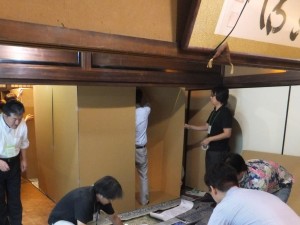
On the evening of August 27, a new place for exchange was set up for the revitalization of commerce in the city at the “Demonstration Experiment on the Development of Merchants and Citizens and the Formation of Networks by Creating a Place for Exchange” conducted by Professor Masanobu Nishimura of the Graduate School of Craft Sciences of Kyoto Institute of Technology in collaboration with the Kyoto City Commercial Promotion Division.

We will make a tea room out of cardboard.

We will make a tea room out of cardboard.

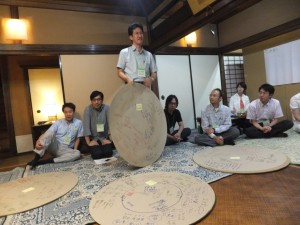
We share the content of the discussion.

We share the content of the discussion.


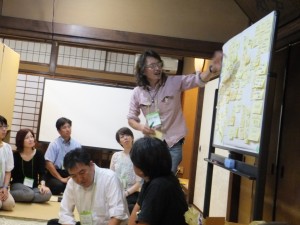
A lot of ideas popped up.

A lot of ideas popped up.

At the “Future Session,” which was accompanied by a surprising gimmick to create a tea room out of cardboard in a townhouse that was more than 100 years old, participants from a variety of attributes, including local merchants, shared ideas necessary for the future of the town with their eyes shining.

Based on these, various entities such as merchants, businesses, citizens, and artists will connect and create a “place” to create. In a few years, the city may look completely different from what it is now.


Future Kyoto Creation Research Project Survey and Research Themes in FY2014Click here for details


Contact us

University Consortium Kyoto Think Tank Project
TEL 075-708-5803 FAX 075-353-9101
〒600-8216 Shimogyo-ku, Kyoto-shi, Nishitoin-dori, Shiokoji, Shimo-ku, Kyoto, Campus Plaza Kyoto
* Reception hours: Tuesday ~ Saturday 9:00 ~ 17:00 (excluding year-end and New Year holidays)

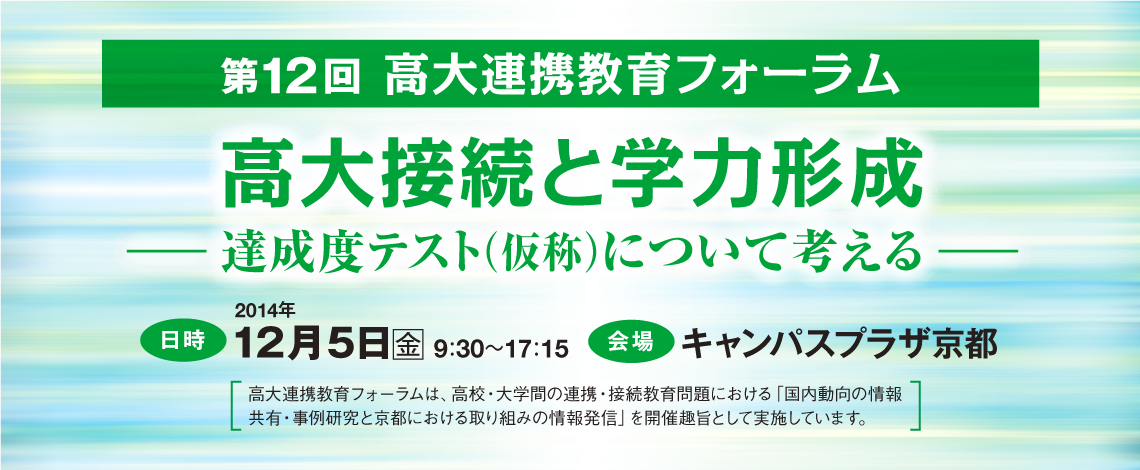
The 12th High School-University Collaborative Education Forum will be held on Friday, December 5th!

The Kyoto High School-University Collaborative Research Council is holding a forum for the purpose of “sharing information on domestic trends and disseminating information on initiatives in Kyoto” on the issue of collaboration and connected education between high schools and universities.

This year’s 12th Collaborative High School and University Education Forum will be held under the theme of “Connecting High School and University and Forming Academic Ability: Thinking about the Achievement Test (tentative name).” We look forward to your participation.

Outline of the event

The 12th High School-University Collaborative Education Forum

banner3University entrance examinations are deeply linked to the school system and social structure of the country. In Japan, the premise of the academic achievement test is that a nationwide common educational curriculum has been established, and it is obligatory that the exam questions be first published and that they be published after the fact. However, these are also things that are unique to Japan from a global perspective. In the current reform of entrance examinations, the implementation of multiple common examinations, graded evaluations, the introduction of IRT (Item Response Theory), and the use of computers are also on the table for discussion. I would like to consider the realistic possibility of a “achievement test (tentative name)” including such issues.

Date Friday, December 5, 2014 9:30~17:15
Venue Campus Plaza Kyoto
theme High School-University Connection and Academic Ability Formation: Thinking about the Achievement Test (tentative name)
Organizer Kyoto High School-University Collaborative Research Council (Kyoto Prefectural Board of Education, Kyoto City Board of Education, Kyoto Prefectural Federation of Private Junior and Senior High Schools, Kyoto Chamber of Commerce and Industry, University Consortium Kyoto)
Occupancy Keynote Reports, Special Lectures, and Case Studies 200 (first-come, first-served basis)
Breakout Session 1.2.3.4 30 people each (first-come, first-served basis)
Application Acceptance Tuesday, October 7, 2014 12:00~Friday, November 21, 2014 17:00
Participation Fee High schools and universities in Kyoto Prefecture JPY 1,000
Persons other than the above (including participants of companies in Kyoto Prefecture) JPY 2,000


Registration: Tuesday, October 7, 2014 12:00 p.m. ~ Friday, November 21, 2014 5:00 p.m. (first-come, first-served basis)
About the 12th High School-University Collaboration ForumClick here for details


Inquiries

University Consortium Kyoto High School-University Collaborative Education Forum
TEL 075-353-9153 FAX 075-353-9101
〒600-8216 Shimogyo-ku, Kyoto-shi, Nishitoin-dori, Shiokoji, Shimo-ku, Kyoto, Campus Plaza Kyoto
* Reception hours: Tuesday ~ Saturday 9:00 ~ 17:00 (excluding year-end and New Year holidays)

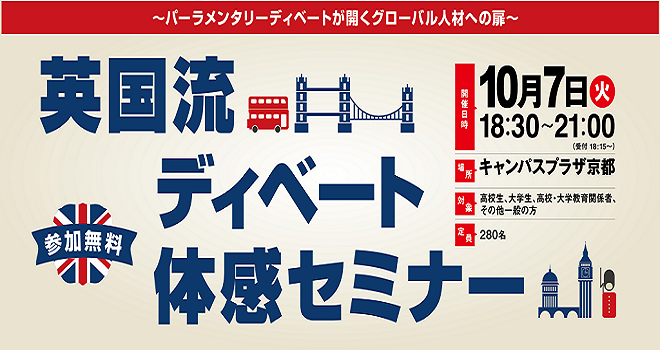
Incandescence! British Debate Seminar in Kyoto 2014 will be held!

British Debate Seminar in Kyoto 2014

We will invite top university and graduate student debaters from the University of Oxford and other universities from their home countries to hold seminars to learn the appeal of parliamentary debate. On the day of the event, model debates and workshops will be held, and debate learning methods will be introduced and exchanges with British students.

1007
Name Incandescence! British Debate Seminar in Kyoto 2014
Date & Time Tuesday, October 7, 2014 18:30~21:00 (Free Admission)
Venue Campus Plaza Kyoto (Shimogyo-ku, Kyoto)
Eligibility Junior and senior high school students, university students, junior and senior high school students, university faculty and staff, and other educators who are interested in debate
Organizer University Consortium Kyoto, Japan English Proficiency Foundation
Sponsors Kyoto Prefectural Board of Education, Kyoto City Board of Education, Japan English Exchange Federation (ESUJ),
British Council
Lecturer Makiko Okada (Executive Director, Japan English Language Exchange Federation)
Tomohiro Nakagawa (Assistant Professor, Department of Mechanical Engineering, Graduate School of Engineering, Osaka Prefecture University)
UK Debate Team: 4 members
University of Oxford, King’s College, University of London, University of Warwick, etc.

Application: Since the capacity has been reached, pre-registration will be closed

button07_moushikomi_04

What you can do at a debate seminar

・ You can learn the ropes of parliamentary debate.
・You can watch the real British top-level debate.
・Students will be able to learn about the multifaceted perspectives, logical thinking skills, problem-solving skills, and communication skills required of global human resources.
・Through workshops, you can learn how to speak out and prepare for speeches.
・Interaction with top British debaters, etc.


* Parliamentary Debate is a debate that, as the name suggests, is a debate that imitates the British parliamentary format, and is widely recognized in the United Kingdom and other countries around the world as a kind of public communication. In addition, since it is a question of how to attract an audience and convince them of their own position, it is attracting attention as a highly effective educational method for fostering the comprehensive skills (logical thinking, problem-solving, communication, presentation skills, etc.) necessary for global human resources, which are in demand right now.


Japan English Testing Association Debate Seminar Secretariat
Email: support-kokusai at eiken.or.jp Person in charge: Taira, Minamino