


[For University Faculty and Staff] 2026 SD Joint Training Program
“Introduction to Generative AI for University Administration”
Applications are now being accepted.

In this training, we emphasize acquiring the mindset for engaging with AI well rather than the “skills to master generative AI.”

[Lecturer] Ginga Moriki
[Date Time] July 3, 2026 (Fri) 13:00~16:00
[Venue] Campus Plaza Kyoto » Access
[Eligibility] Faculty and staff with up to 10 years of service (participation is also welcome for those who are not eligible)
[Participation Fee] Member schools: 1,000 yen (4,000 yen for those not listed on the left) * An invoice will be sent.
[Capacity] 30 people (first-come, first-served)
[Application Deadline] Friday, June 19, 2026 , 17:00
[Training Overview] Introduction to Generative AI for University Administration
Organizer: University Consortium Kyoto (Public Interest Incorporated Foundation)


Notice of recruitment for Reiwa 6th year “Gakumachi Collaboration Project”

1. Business Overview

Kyoto City and the University Consortium Kyoto are implementing the “University Regional Collaboration Creation and Support Project (nicknamed the Gakumachi Collaboration Project)” to support the efforts by granting support funds to projects and projects that work on urban development and regional revitalization in Kyoto through “collaboration” between universities, students, and local communities.
This year marks the 21st year of the program, which has been implemented since the 16th academic year, with the aim of developing human resources by securing practical education and research opportunities for universities, and for local communities, solving local issues and revitalizing them through the knowledge of the university and the vitality of students.


Reiwa 6th Academic Town Collaboration Project Application Guidelines

2. Target Organizations

An organization or group (*) of students from a university consortium Kyoto member university or junior college, with the majority of members being students and the representative being a student. If the program consists of students from more than one university, the majority of the students are students from a university consortium Kyoto member university or junior college.                                                  * University departments, laboratories, seminars, clubs, student circles (circles composed of students from multiple universities are also possible), etc.

< precautions>
As a general rule, only one project can be applied for from the same organization or group. If there are multiple applications, it may be adopted as a single project or rejected. In addition, even if the application is from another organization or group, if it is considered to be the same business, we will make a decision on how to handle it after confirming the purpose of the project and the necessary confirmation of the affiliated organizations.
* If you are unsure of your decision, please contact us. We will consider it according to the specific details of the application.

3. Target Businesses

With the aim of solving local issues and revitalizing the city of Kyoto, projects that are implemented in Kyoto City during the fiscal year and that meet the following requirements are eligible.
However, political activities, religious activities, activities that promote specific ideas, violent or destructive activities, commercial businesses, etc. are excluded.

【Requirements】
(1) Projects in which organizations and groups collaborate and collaborate with local communities (residents’ organizations, civic activity groups, businesses, etc., mainly in the Kyoto city area) and in which students take the initiative in their activities.                                                                                    

* For new businesses, those that can be expected to collaborate with the local community in the future are also acceptable.
Please contact us if you have not decided on a specific partner at the time of application.                                                        * Collaborative and collaborative projects are activities that collaborate with local organizations to tackle local issues and participate in and support the movements of local organizations.                                                                   * Administrative agencies may be included as collaborators, but cooperation with administrative agencies alone is not possible.
Examples: Health and welfare, social education, community development, promotion of academic, cultural, artistic or sports, environmental conservation,
Surveys and research in various fields such as community safety, citizen lectures, events, etc.

(2) Those who have not received any subsidies or subsidies from Kyoto City other than the Gakumachi Collaboration Project.

4. Amount and number of donations

Up to 300,000 yen / 10-15 cases

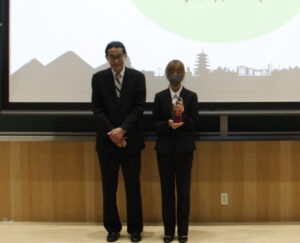
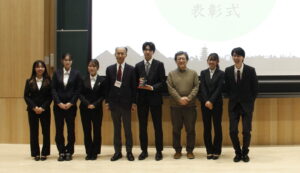
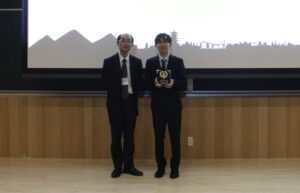
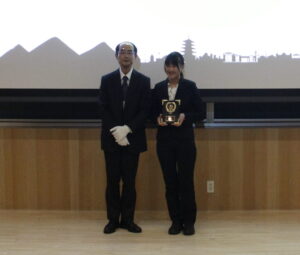
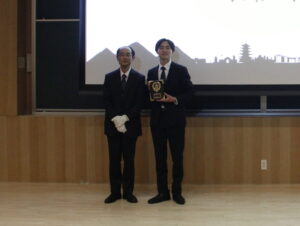
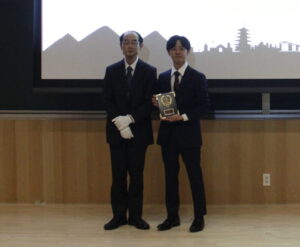
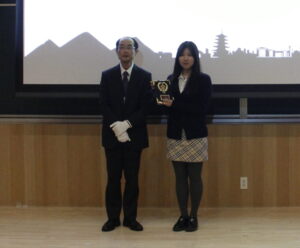
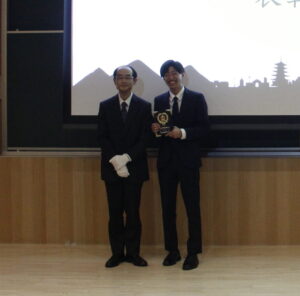
* At the results report meeting scheduled to be held in March of Reiwa 7, the implementing organization (1 organization) recognized as the most excellent will be commended (certificates, trophies, and activity incentives of 100,000 yen will be issued separately).

5. About the application

(1) Application period

Reiwa April 2 (Tue) ~ May 31 (Fri) 13:00
* Documents can only be submitted as data, and paper submission is not required.

(2) Reiwa 6 Business recruitment briefing session * Held online

Date: (1) Saturday, April 20, Reiwa 6, 14:00〜
(2) Thursday, May 9, Reiwa 6, 18:00〜
We also accept questions about how to write an application.


(3) How to apply

Step 1 Before You Start Writing Your Application

We recommend reading the master plan of the administrative district in which the activity will be carried out! In addition, please listen to the opinions of local people and related government agencies as much as possible regarding the background of the project implementation and the needs of the community. If you have any questions about the basic plan of the ward or points to keep in mind when working in the community, you can also consult with the Regional Power Promotion Office of each ward office or branch.
In addition to reconfirming and sharing your objectives and achievement goals, let’s discuss and think once again within the group whether the business content you are thinking about is the best way to achieve your objectives. In addition, for continuing projects, let’s thoroughly summarize the efforts made so far and organize the points for improvement and novelty so that they can be reflected in the application form.

Step 2 Let’s write an application!

< You can download the application form from the link below>
Reiwa 6 Recruitment Guidelines
Reiwa 6th year “Gakumachi Collaboration Project” application form (Microsoft Word)
Example of application entry

Points to fill in

★ Let’s check the judging criteria!
Let’s find out what criteria are used to judge the case.

★ What is the purpose of the business? Write down your purpose and local needs.
The group that listened to the opinions of local people and ward offices in step 1 should also write the contents.

★ Who are you working with (or planning to work with)? What is the role of each? Let’s be specific.
The Gakumachi Collaboration emphasizes learning that can be obtained by collaborating with the university, students, and the community toward the same goal. Let’s write carefully about what kind of role the partner will play.

If you have trouble writing application documents…
“It’s an event involving the elderly, but should I take measures against infectious diseases?”, “I want to set up an internet environment, but can I use the support money?” If you have any concerns or questions, please feel free to contact the University Consortium Kyoto. Consultations are also available by phone, email, and online.

Step 3 Register your business outline

Please use the form below to register your business overview.


Step 4 Submission of application documents

Please fill out the (1) application form (Microsoft WORD) downloaded in step 2 of this page during the application period, and (2) submit it together with reference data (if available) from the submission form below.
(1) Application document data (Microsoft WORD)
(2) Reference data (up to about 10 pages in A4 size) Please submit it as a PDF. * Only if there is one
* Submission of paper media is not required for both (1) and (2).


6. Main Schedule for the Future

Primary screening: After the application deadline ~ mid-June of Reiwa 6
Second screening (public presentation screening): Sunday, June 30, Reiwa 6 * Held at Campus Plaza Kyoto
Notification of support project decision and selection results: Mid-July of Reiwa 6
Certification ceremony and exchange meeting: Mid-July of Reiwa 6 * A certificate will be issued by Kyoto City for the certified project.
Interim report: Mid~end of October 6th year of Reiwa * Submission of documents
Final report: March 7, Reiwa * Submission of documents
Report: Mid ~ end of March 7th year of Reiwa

Inquiries

University Consortium Kyoto Gakumachi Collaboration Project
TEL :075-353-9130 FAX: 075-353-9101
MAIL:gakumachi-admin-ml■consortium.or.jp
(Please change ■ to @ and send)
〒600-8216 Shimogyo-ku, Kyoto-shi, Nishitoin-dori, Shiokoji, Shimo-ku, Kyoto, Campus Plaza Kyoto
* Reception hours: Tuesday ~ Saturday 9:00 ~ 17:00

【For Students, Faculty and Staff】8/7 (Fri.) “IELTS Skill Up Seminar (Online)” Recruitment of Participants

The University Consortium Kyoto will hold an online IELTS skill improvement seminar for students, faculty, and staff belonging to member universities.

In this seminar, you will be taught by an IELTS expert who will aim for a score of 6.0 or higher in each of the writing and speaking sections, and learn about question tendencies, scoring criteria and specific learning methods. We’ll also give you an overview of the entire test and tips for improving your score.


If you are considering taking IELTS,
Those who have taken the IELTS test and are aiming to further improve their scores,
Faculty and staff involved in international exchange,
Teachers from member schools who want to use it as a hint for English classes,
Please actively participate.

Date & Time

Friday, August 7, 2026 13:00~15:30 (Open at 12:50)

Embodiment

Online (Zoom)
*Please prepare an internet environment and a computer and participate from a convenient location.
You can participate with your microphone and camera turned off.

Target

Students and faculty members enrolled in member schools of the University Consortium Kyoto

List of University Consortium Kyoto member schools

Occupancy

100 people (first-come, first-served)

Expenses

No material

Lecturer

Dr. Rita Furuya IDP IELTS Certified IELTS Expert
Dr. Daisuke Yoshioka, JSAF-IELTS Official Test Center

Contents

*All lectures will be conducted in Japanese.

・Part 1: IELTS Overview and Tips for Improving Your Score (30 minutes)

 IELTS Overview, Introduction to Kyoto Test Center, Tips for Improving Your Reading/Listening Score

・Part 2: Preparation Course for IELTS Speaking / Writing 6.0

Speaking Speaking based on evaluation criteria, measures for frequent topics, writing structure and logical development, how to generate ideas, and improvement methods according to the scoring criteria

How to apply

Click on each banner at the top of this table, enter the information at the link, and press “Submit”.
At a later date, you will receive the seminar URL to the email address you entered.

Application Deadline

Until Thursday, August 6, 2026, 17:00


Organizer: University Consortium Kyoto
【Cooperation】Japan Study Abroad Foundation (JSAF)

Contact:
University Consortium Kyoto International Business Division
IELTS
TEL:075-353-9164
Email: kokusai■consortium.or.jp (Please change ■ to @ and send it.) )

【For university staff】2025 SD Seminar “Open Seminar” is now accepting applications!

Since 2015, the University Consortium Kyoto has been conducting SD seminars as part of university staff training. This training program aims to develop staff who will autonomously and proactively take charge of the future university management of each university and junior college, mainly member schools, and provides a curriculum that allows students to systematically acquire the knowledge necessary for university staff.

In recent years, we have heard that many staff members are considering participating in the SD seminar but are hesitant to participate. Therefore, in order to make learning in the SD seminar widely known, we have decided to open some of the programs as “open seminars”.

If you are considering taking the SD Seminar, or if you are in charge of human resources or training to send out students, please feel free to join us.

Eligible Programs

Date and time Themes & Lecturers

Saturday, May 31
14:50-17:30

Academic Writing Fundamentals
-How to convert “problem awareness” into concrete “questions”? -
Lecturer: Takashi Sakamoto (Associate Professor, Department of General Education, Kyoto University of Pharmacy and Pharmaceutical Sciences)

Saturday, June 7
13:50-17:00

Academic Literacy and Policy Advocacy Report
– Understanding Academic Literacy and Beginning Research –
Lecturer: Mr. Takamichi Murayama (Kyoto Bunkyo Gakuen Corporate Secretariat, General Affairs Department Manager)

Saturday, June 14
13:50-17:00

University Systems, Laws, and Organizations
– Understanding university education-related systems, laws, and organizations for high-quality work –
Lecturer: Tsunetaka Miyabayashi
(Director of Academic Affairs Division, Tokyo Metropolitan University Corporation (concurrently serving as Director of Preparation for Establishment))

Saturday, June 21
13:50-17:00

Universities and Higher Education Policy: Looking at Universities from the Perspective of Higher Education Policy
Lecturer: Mr. Hiroshi Matsuzaka (Director, General Affairs Division, Minister’s Secretariat, Ministry of Education, Culture, Sports, Science and Technology)

Saturday, June 28
13:50-17:00

Universities and Society: The Meaning of Regional Cooperation and the Role of Universities
Lecturer: Masaho Fukao (Professor, Faculty of Policy Studies, Ryukoku University)

Saturday, July 12
13:50-17:00

Collaboration between universities and high schools, and connections between high schools and universities
―Thinking about the connection between high school and university from high school education―
Lecturer: Mr. Katsumi Arase (President, Faculty Support Organization)

Saturday, July 26
13:50-17:00

Branding and Student Recruitment: How to Proceed with University Branding
Lecturer: Kenji Kamijo (Professor, Department of Regional Business, Faculty of Business Administration, Aichi Toho University)

Please refer to the syllabus for details.[2025 SD Seminar Syllabus]

Application

Venue
Campus Plaza Kyoto

Target
University staff who are interested in SD seminars or those in charge of human resources and training at the university

Eligibility
For the purpose of watching the atmosphere and progress of the program, in principle, one time

Participation Fee
free

Occupancy
Up to 3~5 people each time (first-come, first-served basis/depending on the number of applicants, we may refuse)

Application Deadline
Until 17:00 2 weeks before each event date


Inquiries

University Consortium Kyoto SD Project
TEL 075-353-9163 FAX 075-353-9101
〒600-8216 Shimogyo-ku, Kyoto-shi, Nishitoin-dori, Shiokoji, Shimo-ku, Kyoto, Campus Plaza Kyoto
* Business hours: Tuesday ~ Saturday 9:00 ~ 17:00 (excluding year-end and New Year holidays)

*Closed [For Students/Faculty] 5/16 (Sat) ‘TOEFL iBT® Test Skill Up Seminar’ Applications Now Open

*This seminar has ended.

Continuing from last year, we are offering a special program for university students and faculty belonging to member universities of the University Consortium Kyoto,
We will be holding the ‘TOEFL iBT® Test Skill Enhancement Seminar‘ led by ETS-certified trainers.
A unique opportunity to learn the essence of study methods useful for the TOEFL iBT testSo please join us.
* This year, the event will be held online via Zoom as well, so you can join from home.


The TOEFL iBT® test is one of the world’s most successful tests designed to measure the proficiency of non-native English speakers. It comprehensively measures the four skills of reading, listening, speaking, and writing.
TOEFL iBT® test scores are widely used by more than 11,500 universities, graduate schools, and educational institutions in 160 countries around the world for study abroad and entrance examinations.
In this seminar, ETS certified trainers will explain not only the basics of the TOEFL iBT® test, but also more effective ways to study to improve your score, using past questions.


Date & Time:

Saturday, May 16, 2026 10:00~13:00

Embodiment:

Online (Zoom)
* Please prepare an Internet environment that can access the online course and a computer with a camera and microphone function, and access from a convenient location.

Target:

Only students/faculty members belonging to member universities of the University Consortium Kyoto

Capacity:

50 (first-come, first-served basis)
* Please note that it will be closed as soon as the capacity is reached.

Lecturer:

U.S. ETS Certified Trainer
Prof. Chiaki Taoka (Associate Professor, Center for Common English Education, Kobe Jogakuin University )

Contents:

・ How to study for the TOEFL test

– Summary and preparation of each section of the revised TOEFL iBT test

(Reading, Listening, Speaking, Writing)

・Effective study methods and teaching materials for the TOEFL iBT® test

*Lectures will be conducted in Japanese.

*This seminar is for those who are just starting to study for the TOEFL or those who have taken the test and are aiming to further improve their scores.


Co-organizers: University Consortium Kyoto / ETS Japan G.K.

Contact:
[TOEFL® Test Japan Office]
ETS Japan G.K. https://www.toefl-ibt.jp/test_takers/
Email: event■etsjapan.jp (Please change ■ to @.) )

The 23rd High School Collaborative Education Forum Report Collection has been released.

The 23rd High School Collaborative Education Forum held on Saturday, December 6, 2025

“What inquiry-based learning brings to high school and university
~Approaching the “Moyamoya” of high school-university collaboration~

The collection of reports has been completed.
Click on each of the items below to view it as a PDF.

Part 1

Opening Remarks
Explanation of purpose “What inquiry-based learning brings to high school and university
~Approaching the “Moyamoya” of high school-university collaboration~
Keynote Speech “Segmentation” of High School and University Connections and the Meaning of Inquiry Learning
Panel Discussion


Part 2: Breakout Sessions

1st Session What is the “form” of effective high school-university collaboration to deepen high school inquiry activities?
~The Present and Future of High School-University Collaboration~
Session 2 “Moyamoya” of collaboration and collaboration that expands the possibilities of exploratory learning
-Exploring the issues and hints of external cooperation from the perspectives of junior high school, high school, and university-
Special Sessions (1) How to evaluate inquiry activities in comprehensive selection?
~In the wake of the creation of the rubric~

Special Breakout Session (2)

“Moyamoya” of inquiry that high schools and universities think about together
~University students talk about the confusion of inquiry, the challenges of university students who support inquiry~


*You can see the full page report collection here.
Report of the 23rd High School Collaborative Education Forum
Part 1
Part 2

Contact us

University Consortium Kyoto, Educational Development Division, High School-University Collaboration Project
TEL 075-353-9153 FAX 075-353-9101
〒600-8216 Shimogyo-ku, Kyoto-shi, Nishitoin-dori, Shiokoji, Shimo-ku, Kyoto, Campus Plaza Kyoto
* Business hours: Tuesday ~ Saturday 9:00 ~ 17:00 (excluding year-end and New Year holidays)

Notice of recruitment of “Learning town collaboration project (standard frame) that connects students and the community in Reiwa 8”

1. Business Overview

Kyoto City and the University Consortium Kyoto implements the “Learning Town Collaboration Project Connecting Students and the Community” in which universities, students, and the community collaborate to provide support funds to projects and projects that work on urban development and regional revitalization in Kyoto.
We look forward to learning in the field of practice through activities that work together with local organizations to tackle local issues and participate in the efforts of local organizations to support their movements.
It has been implemented since 16, and this year will be the 23rd year.
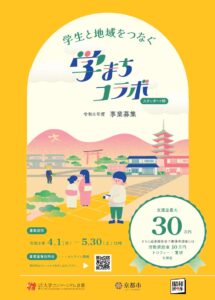


[Reiwa 8 “School Town Collaboration Project Connecting Students and Communities (Standard Frame)” Recruitment Guidelines]

2. Target Organizations

An organization or group (*) that is a member of the University Consortium Kyoto member universities and junior colleges, and the majority of its members are students and the representative is a student. If the group consists of students from multiple universities, it is acceptable if the majority of the students are students from Kyoto member universities and junior colleges of the University Consortium.                                                  *University departments, laboratories, seminars, clubs, student circles (circles composed of students from multiple universities are also acceptable), etc.

< precautions>
As a general rule, only one project can be applied for from the same organization or group. If there are multiple applications, it may be adopted as a single project or rejected. In addition, even if the application is from another organization or group, if it is considered to be the same business, we will make a decision on how to handle it after confirming the purpose of the project and the necessary confirmation of the affiliated organizations.
* If you are unsure of your decision, please contact us. We will consider it according to the specific details of the application.

3. Target Businesses

With the aim of solving local issues and revitalizing the city of Kyoto, projects that are implemented in Kyoto City during the fiscal year and that meet the following requirements are eligible.
However, political activities, religious activities, activities that promote specific ideas, violent or destructive activities, commercial businesses, etc. are excluded.

[Requirements]
(1) A project in which organizations and groups work in cooperation and collaboration with the local community (resident organizations, civic activity groups, business operators, etc. mainly working in the Kyoto City area),Students take the initiative to carry out activities.

*For new businesses, those that can be expected to collaborate with the local community in the future are also acceptable.
Please contact us if you have not decided on a specific partner at the time of application.                                                        *Projects that are worked on in collaboration and collaboration are activities that work together with local organizations to tackle local issues and participate in the movements of local organizations and support those movements.                                                                   *Administrative agencies may be included in the cooperative destination, but cooperation with only administrative agencies is not possible.
Examples: Health and welfare, social education, community development, promotion of academics, culture, arts or sports, environmental conservation,
Research in various fields such as community safety, citizen lectures, events, etc.

(2) Those who have not received any subsidies or subsidies from Kyoto City other than the Gakumachi Collaboration Project.

4. Amount and number of donations

Up to 300,000 yen / About 10-15 cases

*In addition, at the achievement report meeting scheduled to be held in March 9, we will award the implementing organization (1 organization) of the project that was recognized as the most outstanding (certificate, trophy, and activity incentive of 100,000 yen will be issued separately).

5. About the application

(1) Application period

April 1, Reiwa 8 (Wed) ~ May 30 (Sat) 13:00
*Submission of documents is data only, and paper submission is not required.

(2) Reiwa 8 Business Recruitment Briefing Session *Held online

Date and time: (1) Friday, April 17, Reiwa 8 18:30〜
(2) Friday, May 8, Reiwa 8, 18:30〜
We also accept questions about how to write an application.

                                       

(3) How to apply

Step 1 Before You Start Writing Your Application

We recommend reading the master plan of the administrative district in which the activity will be carried out! In addition, please listen to the opinions of local people and related government agencies as much as possible regarding the background of the project implementation and the needs of the community. If you have any questions about the basic plan of the ward or points to keep in mind when working in the community, you can also consult with the Regional Power Promotion Office of each ward office or branch.
In addition to reconfirming and sharing your objectives and achievement goals, let’s discuss and think once again within the group whether the business content you are thinking about is the best way to achieve your objectives. In addition, for continuing projects, let’s thoroughly summarize the efforts made so far and organize the points for improvement and novelty so that they can be reflected in the application form.

Step 2 Let’s write an application!

Download the application form from the following>
Reiwa 8 Recruitment Guidelines
Reiwa 8 “School Town Collaboration Project Connecting Students and Communities (Standard Frame)” Application Form (Microsoft Word)
Application Example

Points to fill in

★ Let’s check the judging criteria!
Let’s find out what criteria are used to judge the case.

★ What is the purpose of implementing the business? Write down the purpose and the need for the region.
In step 1, the group that listened to the opinions of local people and ward offices should also write the contents.

★ Who are you working with (or planning to work with)? What is the role of each? Let’s be specific.
The Gakumachi Collaboration emphasizes learning that can be obtained by collaborating with the university, students, and the community toward the same goal. Let’s write carefully about what kind of role the partner will play.

If you have trouble writing application documents…
If you have any concerns or questions, such as “I want to improve my internet environment, but can I use the support funds?”, please feel free to contact the University Consortium Kyoto. We also accept consultations by phone, email, and online.

Step 3 Register your business outline

Please use the form below to register your business overview.


Step 4 Submit Application Documents

Please fill out the (1) application form (Microsoft WORD) downloaded in step 2 of this page and (2) reference materials (if any) and submit them using the submission form below.
(1) Application document data (Microsoft WORD)
(2) Reference material data (up to about 10 pages converted to A4 size. Please submit it as a PDF. *Only if there is
*Submission in paper format is not required for both (1) and (2).

 

6. Main Schedule for the Future

First screening: After the application deadline ~ mid-June 8th year of Reiwa
Second screening (public presentation screening): Sunday, June 28, Reiwa 8 *Held at Campus Plaza Kyoto
Notification of support project decision and selection results: Mid-July 8
Certification ceremony and exchange meeting: Mid-July ~ late July 8 *Certificates issued to certified projects
Interim report: Mid-October ~ late October 8 *Submission of documents
Final report: March 9 *Submission of documents
Announcement: Mid-March ~ late March 9

7. Recruitment of trial slots

We plan to start recruiting for trial slots for students who are about to start community activities from June this year as well.
Details will be announced separately.

Inquiries

University Consortium Kyoto Gakumachi Collaboration Project
TEL :075-353-9130 FAX: 075-353-9101
MAIL:gakumachi-admin-ml■consortium.or.jp
(Please change ■ to @ and send)
〒600-8216 Shimogyo-ku, Kyoto-shi, Nishitoin-dori, Shiokoji, Shimo-ku, Kyoto, Campus Plaza Kyoto
* Reception hours: Tuesday ~ Saturday 9:00 ~ 17:00




Campus Plaza Kyoto Announcement of Facility Reservation Schedule for the 2026 academic year


・Facility reservations for April, May, and June 2026 will be available from Tuesday, March 10, 2026.

 
We will accept it.
 
* In the case of application at the university fee, it will be accepted for April ~ September.
At the time of application and use, faculty card or enrollment certificate, etc. (valid until the day of use),

Please present materials such as flyers that indicate that they are sponsored by the university or faculty and staff.
If you have not issued a faculty or staff certificate before the new academic year, at the university where you are enrolled,
Please present documents proving employment.
If you cannot confirm your faculty ID, the university fee will not apply.
It will be a general fee. (For April ~ June reception)

For more information on the application of university fees,
Please refer to “Application of University Fees for the Use of Campus Plaza Kyoto“.

    Reception will be given priority to those who visit the museum on March 10 (Tuesday).
   
Facility reservations by phone will be accepted after the reception of visitors is completed.
   
Please be careful.

* Last year’s facility reservations by phone will be accepted from around 3 p.m.

2026The availability after April is as follows:
It will be released on Sunday, March 1, 2026 at 9 a.m.

    In addition, since the use of credit-compatible classes and university public lectures is prioritized,
   
Availability is subject to change daily, so please check the availability from time to time.

Kyoto University Consortium 2023 Project Implementation Report Meeting

Since its establishment in 1994, the Kyoto University Alliance has been Japan’s first university alliance organization and is a platform for university and regional collaboration, working closely with member universities and junior colleges, local communities, industry, business, and local governments to develop diverse, advanced, and challenging projects. Currently, we are working to advance our business in accordance with the five-year medium-term plan “Phase 5 Plan” from FY2019 to FY2023.
We will hold the following “Project Implementation Report Meeting” to report on the main projects implemented by each business unit in FY2023. We will also outline the Phase 6 plan, which will begin in fiscal year 2024.
It will be held at the end of the fiscal year, and we look forward to your participation.

1. Date and Time

Friday, March 15, 2024 10:00 a.m. ~ 11:00 a.m.

2. Format

Online (Zoom meeting) * Zoom meeting URL will be provided to applicants at a later date.

3. Content

(1) Kyoto University Consortium 2023 Project Implementation Report
(2) Overview of the University Consortium Kyoto Phase Plan (2024-2028)
(3) Q

4. How to apply

Please apply through the link below by Friday, March 8, 2024.


5. Inquiries about this matter

Kyoto University Alliance
Research and Public Relations Department (Kawai)
Phone: 075-353-9130 / Fax:075-353-9101
E-mail: type3■consortium.or.jp (Please replace ■ with @)
  

Kyoto University Consortium 2023 Project Implementation Report Meeting

Since its establishment in 1994, the Kyoto University Alliance has been Japan’s first university alliance organization and is a platform for university and regional cooperation, developing diverse, advanced, and challenging projects in close cooperation with member universities and junior colleges, local communities, industry, business, and local governments. Currently, we are working to advance our business in accordance with the five-year medium-term plan “Phase V Plan” from FY2019 to FY2023.
We will hold the following “Project Implementation Report Meeting” to report on the main projects implemented by each business unit in FY2023. We will also outline the sixth phase of the plan, which will begin in fiscal year 2024.
It will be held at the end of the fiscal year, and we look forward to your participation.

1. Date and Time

Friday, March 15, 2024 10:00 a.m. ~ 11:00 a.m.

2. Format

Online (Zoom meeting) * The Zoom meeting URL will be provided to applicants at a later date.

3. Contents

(1) Kyoto University Consortium 2023 Project Implementation Report
(2) Overview of the University Consortium Kyoto Phase Plan (2024-2028)
(3) Q

4. How to apply

Please apply by Friday, March 8, 2024 through the link below.


5. Inquiries on this matter

Kyoto University Alliance
Research Public Relations Department (Kawai)
Phone: 075-353-9130 / Fax:075-353-9101
E-mail: type3■consortium.or.jp (Please replace ■ with @)