

- Business overview
- Target organizations
- Target projects
- Amount of support / Number of cases
- Regarding the application
- Upcoming Schedule
- Selection Results
- Implementation Report
- Regarding applications for trial positions
- Contact Information
1. Business overview
The City of Kyoto and the University Consortium Kyoto are implementing the “Student-Community Collaboration Project,” which provides grants to support projects and initiatives that involve collaboration between universities, students, and local communities to contribute to urban development and regional revitalization in Kyoto. The project aims to provide students with practical learning opportunities
through activities that involve working together with local organizations to address local issues, as well as participating in and supporting the initiatives of local organizations. The
project has been running since 2004, and this year marks its 23rd year.
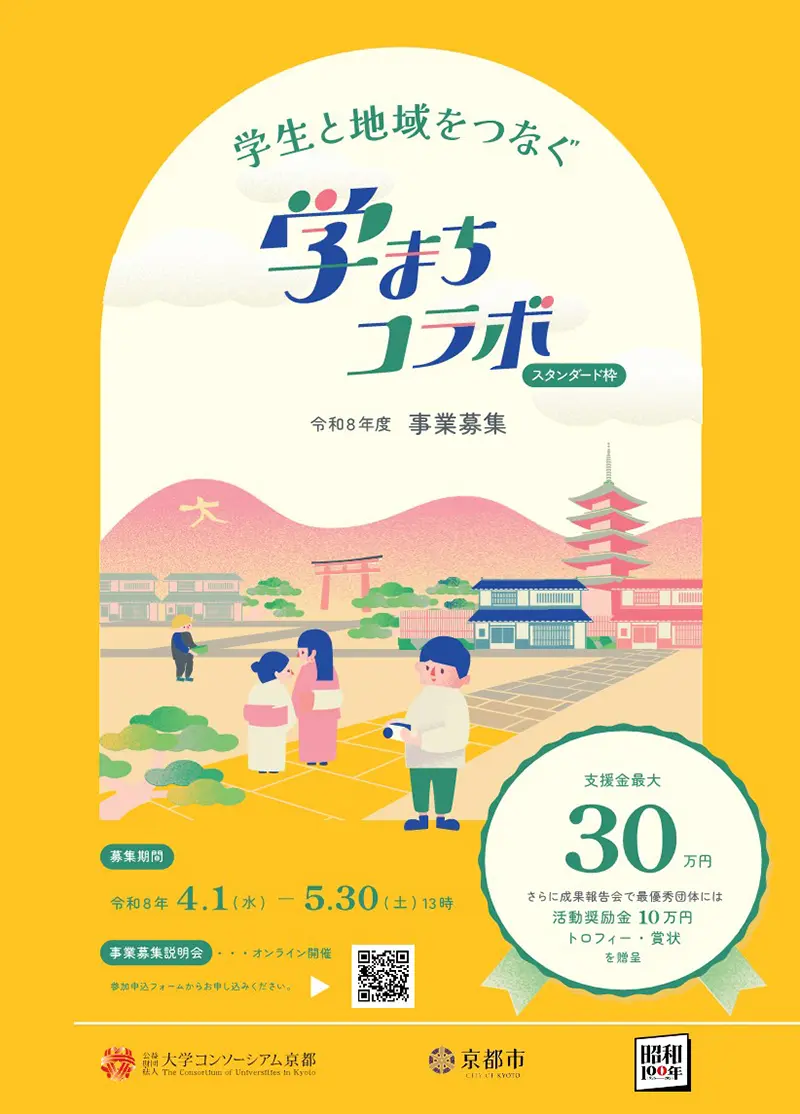
[Application Guidelines for the FY2026 “Student-Community Collaboration Project (Standard Category)”]
2. Target Organizations
Organizations and groups (*) whose members are students of universities and junior colleges affiliated with the Kyoto University Consortium, where the majority of members are students and the representative is a student. If the group consists of students from multiple universities, it is acceptable as long as the majority are students from universities and junior colleges affiliated with the Kyoto University Consortium.
*Examples include university departments, research labs, seminars, clubs, and student circles (circles composed of students from multiple universities are also acceptable).
<Important Notes>
As a general rule, only one project can be submitted by the same organization or group. If multiple applications are received, they may be treated as a single project and either selected or rejected. Furthermore, even if applications are submitted by different organizations or groups, if they appear to be the same project, we will make a decision on how to handle them after confirming the project’s purpose, collaborating organizations, and other necessary details.
*Please consult us if you are unsure about how to proceed. We will consider your application based on its specific content.
3. Target Projects
This program targets projects implemented within Kyoto City during the current fiscal year, with the aim of addressing local issues and revitalizing the area, provided they meet the following requirements.
However, projects aimed at political activities, religious activities, the dissemination of specific ideologies, violent or destructive activities, or profit-making businesses are excluded.
[Requirements]
① Projects undertaken by organizations/groups in collaboration with local communities (primarily resident organizations, citizen activity groups, businesses, etc., operating within the Kyoto City area), in which students take the lead in the activities.
*New projects that are expected to involve collaboration with the local community in the future are also acceptable.
Please consult with us if you have not yet decided on a specific partner at the time of application.
*Projects undertaken in collaboration include activities that work together with local organizations to address local issues, or activities that involve participating in and supporting the activities of local organizations.
*Government agencies may be included as partners, but collaboration with government agencies alone is not permitted.
Examples: Research and studies in various fields such as health and welfare, social education, community development, promotion of academics, culture, arts or sports, environmental conservation, and
community safety, as well as public lectures and events.
② Those who have not received grants or subsidies from Kyoto City other than the Gakumachi Collaboration Project.
4. Amount of support and number of cases
Up to 300,000 yen / Approximately 15 cases
*At the results presentation meeting scheduled for March 2027, the organization that is deemed to have the most outstanding project
(1 organization) will be awarded a certificate, trophy, and activity grant of 100,000 yen.
5. Regarding applications
(1) Application period
April 1st (Wed) – May 30th (Sat), 2026, 13:00
*Only digital documents are accepted; paper submissions are not required.
(2) FY2026 Project Application Briefing Session *Held online
Date and Time: ① Friday, April 17, 2026, 18:30~
② Friday, May 8, 2026, 18:30~
We will also accept questions regarding how to fill out the application form.
(3) Application method
Step 1: Before you begin writing your application
We recommend that you read the basic plan of the administrative district where you will be conducting your activities! Also, please listen to the opinions of local residents and relevant administrative agencies as much as possible regarding the background of the project and the needs of the community. If you have any questions about the district’s basic plan or points to keep in mind when conducting activities in the community, you can consult with the Community Empowerment Promotion Office at each ward office or branch office.
Reconfirm and share your objectives and goals, and once again discuss within your group whether the project you are considering is the best way to achieve those objectives. Furthermore, for ongoing projects, thoroughly summarize your efforts to date and organize the points for improvement and new elements so that they can be reflected in the application.
Step 2: Let’s write the application form!
<Download application forms and other documents from the links below>
● Application Guidelines for FY2026
● Application Form for FY2026 “Student-Community Collaboration Project (Standard Category)” (Microsoft Word)
● Example of completed application form
| Points to remember when filling out the form |
★Check the judging criteria! ★What is the purpose of this project? Clearly state the objective and its necessity in the community. ★Who are the partners you are collaborating with (or plan to collaborate with)? What are their respective roles? Please write specifically. |
If you have any trouble filling out application forms or
have any other questions, such as “Can I use the grant to improve my internet environment?”, please feel free to contact the University Consortium Kyoto. We accept consultations by phone, email, and online.
Step 3: Register your business overview
Please register your business overview using the form below.
Step 4: Submission of application documents
Please fill out the application form (Microsoft Word) downloaded in Step 2 on this page during the application period, and submit it along with the supporting documents (if any) using the submission form below. ①
Application document data (Microsoft Word)
② Supporting documents data (up to approximately 10 pages in A4 size. Please submit as a PDF.) *If any
* Paper copies of both ① and ② are not required.
*Applications for this year have now closed.
6. Main Schedule for the Future
First Selection Round: After application deadline to mid-June 2026
Second Selection Round (Public Presentation Review): June 28, 2026 (Sunday) *Held at Campus Plaza Kyoto
Support Project Decision and Notification of Selection Results: Mid-July 2026
Certification Ceremony and Exchange Meeting: Mid-to-late July 2026 *Certificates will be issued to certified projects
Interim Report: Mid-to-late October 2026 *Document submission
Final Report: March 2027 *Document submission
Reporting Session: Mid-to-late March 2027
Recruitment of general audience members for the second round of judging (presentation judging)
We will be holding a presentation review (second round of judging) to determine the projects selected for the FY2026 “Student-Community Collaboration Project (Standard Category)”.
At the selection committee meeting, organizations that have passed the initial screening will present their projects with creative presentations, highlighting the effectiveness and characteristics of their projects, as well as their enthusiasm for the initiative, in an effort to be selected.
This is an opportunity to see university and student initiatives in collaboration with the local community, so we welcome anyone who is interested to participate.
FY2026 “Student-Community Collaboration Project (Standard Category)” Presentation Judging Committee
| Date and time |
Sunday, June 28, 2026, 10:00 AM – 4:30 PM (scheduled end time) *The time may vary slightly depending on the progress of the day. |
| venue | Lecture Room 1, 5th Floor, Campus Plaza Kyoto |
| Schedule for the day | Second Selection Round (Presentation Review) Schedule |
| Participation fee | free |
★Regarding Participation Application Applications
will be accepted from June 19th (Fri) to June 27th (Sat) at 3:00 PM, 2026.
If you wish to participate, please apply using the link below. (Clicking “Apply” will open the application form.)
*Registration is now closed.
Selection Results
First selection round (document review)
24 projects passed the first screening
Second Selection Round (Presentation Review Session)
On June 28, 2026, we held the second selection round (presentation review meeting), and
the following 16 projects were certified as supported projects.
<List of Certified Projects (16 projects) for the FY2026 Student-Community Collaboration Project (Standard Category)> (in order of application)
| Business name | Organization Name [Related University Name] Activity Administrative District |
Business overview |
|---|---|---|
| “Kyoto Napkin Media (KNM)” – Reconnecting students and local communities through paper napkin advertising. | BoCS [Kyoto University] Activity Administrative District: Sakyo Ward |
By collaborating with restaurants in Kyoto City and using highly visible paper napkins to disseminate local information and original content, we aim to reach audiences that were not accessible through existing social media platforms, thereby encouraging student participation in the local community. |
| Kamo Cinema 21 | Kamo Cinema 21 Executive Committee [Ritsumeikan University] Activity District: Sakyo Ward |
Using the Kamogawa River embankment as the stage, this participatory event combines environmental beautification activities, community interaction, cultural experiences, and outdoor film screenings to create a space for intergenerational interaction and promote understanding of SDGs and environmental education. |
| Gifted Project ASOBI-BA | Kyoto University of Education Inclusion Seminar [Kyoto University of Education] Activity Area: All Districts |
This program aims to create a safe and welcoming environment for gifted children through play and experiential activities, while also providing a space for parents to connect with each other and fostering connections within the local community. |
| Keihoku Revitalization Plan | Takumi Rajuriku [Saga University of Arts] Activity Administrative District: Ukyo Ward |
To revitalize the Keihoku area, students will actively participate in local events, utilizing characters and route maps they created, deepening their interactions with local residents, and aiming to increase the number of visitors by filming and distributing documentary videos of each event. |
| Kyoto Footpath in Kuta | Ryukoku Regional Revitalization Project [Ryukoku University] Activity Administrative District: Sakyo Ward |
A footpath event will be held where local residents, students, and tourists can experience the charm of Kuta while interacting with each other. By walking around the area, participants can learn about its history, nature, and culture, and through interaction with local residents, the event aims to promote the region’s appeal and create a network of people connected to the area. |
| Children’s cafeteria “Akatsuki” |
Children’s Cafeteria “Akatsuki” [Kyoto Sangyo University/Otani University] Activity Area: Sakyo Ward |
Based at a senior welfare facility in Sakyo Ward, students in teacher training programs and other courses take the lead in running a children’s cafeteria once a month. In collaboration with other student clubs and local organizations, they provide not only meals but also learning support such as homework assistance, workshops, and intergenerational exchange events. |
| Keihoku Utsu Friendship and Learning Together | Keihoku Utsu Treasure Hunt Association [Kyoto Seika University / Kyoto University of Foreign Studies] Activity District: Ukyo Ward |
To revitalize the Utsu area, students and local residents will collaborate to hold festivals and children’s events, and disseminate information through social media to create a network of people connected to the area. Through events such as “Utsu Terakoya,” a community space for junior and senior high school students, and film screenings, they will foster interaction with diverse generations in the community. |
| Bukkyo University Orange Project | Nijo Tomoiki Club Miya Cone [Bukkyo University] Activity Administrative District: Nakagyo Ward |
By having people with dementia, students, and the local community collaborate to plan and implement exchange and awareness-raising events, we aim to broaden opportunities for people with dementia to participate in society, deepen understanding of dementia, and create a community where everyone supports each other. |
| “Japan’s Hollywood” Reborn – Set in the Uzumasa Daiei-dori Shopping Street | Uzumasa Popcorn!!!! [Saga University of Arts] Activity District: Ukyo Ward |
In collaboration with the Daiei-dori Shopping Street in Uzumasa, we will hold events related to movies and period dramas, as well as interactive stamp rallies for children, to promote the charm of this film town and revitalize the shopping street. |
| The “next” Ichijoji Project: Connecting Through Sound | “The City, People, and Music” Seminar [Kyoto Seika University] Activity Administrative District: Sakyo Ward |
Through planning and managing community revitalization events in Ichijoji, we aim to promote the charm of Ichijoji to both local residents and visitors. This includes organizing music play workshops for children, holding the “Ichijoji Autumn Festival” at Ichijoji Park, and performing the traditional iron fan dance. |
| Children’s Safe Space Creation Project | Smile↑↑↑ [Ryukoku University] Activity District: Fushimi Ward |
To create a safe space where children can talk about their small anxieties and worries, we aim to build a community where children can feel secure by having students participate as equals and approachable figures through a candy store project held once a month in a children’s park and exchange activities at local facilities. |
| Children’s Safe Space Support Program | Learning support group Apolon [Ritsumeikan University, Kyoto Prefectural University, Osaka Gakuin University] Activity area: Nakagyo Ward |
Through various opportunities to interact with students, including study sessions for junior and senior high school students, seasonal events, and factory tours to deepen their understanding of work, we are working to provide a safe place for children and to create an environment where the entire community supports their growth. |
| Miyako Light ’26 | Miyako Light Executive Committee [Kyoto Sangyo University, Kyoto Institute of Technology, Ryukoku University, Ritsumeikan University] Activity Administrative District: Kamigyo Ward |
Through events such as the illumination of Kyoto townhouses in Nishijin, the aim is to promote the charm of lifestyle and traditional culture both within and outside the region, thereby increasing interest in and affection for the preservation and inheritance of townhouses, and deepening the connection between the community and students. |
| Flowing Memories, Connecting Shirakawa: An Intergenerational Exchange Project Through Local Lifestyle and Culture | team daihachi [Kyoto University Graduate School] Active administrative district: Higashiyama Ward |
In the Awata school district, we aim to share the memories of a lifestyle rooted in the community and its connection to water, and to create new opportunities for community interaction. We will promote the charm of the region by holding events such as those inspired by the Yuzen dyeing technique that was practiced in the past, as well as Awata ware kintsugi (gold repair) workshops and tea ceremonies. |
| ~Choosing not to throw things away, weaving a life~ Shimogyo Circular Economy Project | Circulink [Doshisha University] Activity Administrative District: Shimogyo Ward |
We will create an eco-map listing environmentally friendly stores and collection points for containers, clothing, etc., in Shimogyo Ward, and distribute it at events to make resource recycling options more visible. We will also raise environmental awareness and promote community interaction by holding upcycling workshops using unwanted clothing in the area. |
| Operation of community exchange centers using renovated vacant houses and disaster prevention and self-reliance revitalization projects | KYOBI Architectural Research Group [Kyoto University of Arts and Crafts] Activity District: Higashiyama Ward |
In the Imakumano district, students are renovating vacant houses to create a base where they can live and share a space with the community. By working with local residents on disaster prevention drills and neighborhood watch activities, they aim to build face-to-face relationships, thereby revitalizing disaster prevention self-governance and expanding the number of people involved in the area. |
Implementation Report
FY2026 Presentation Review Committee (Second Selection Round)
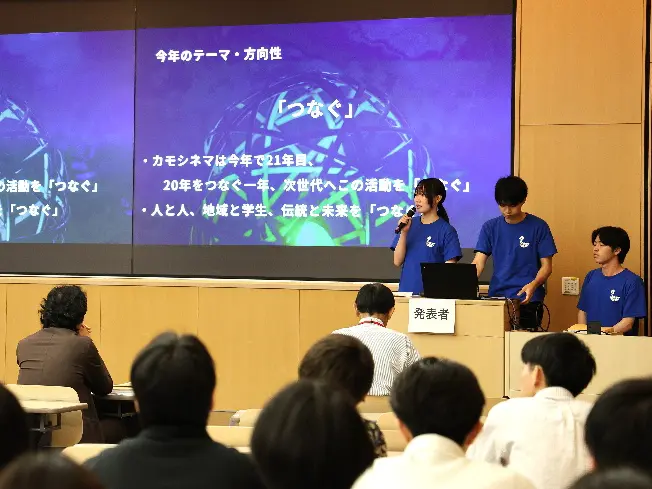
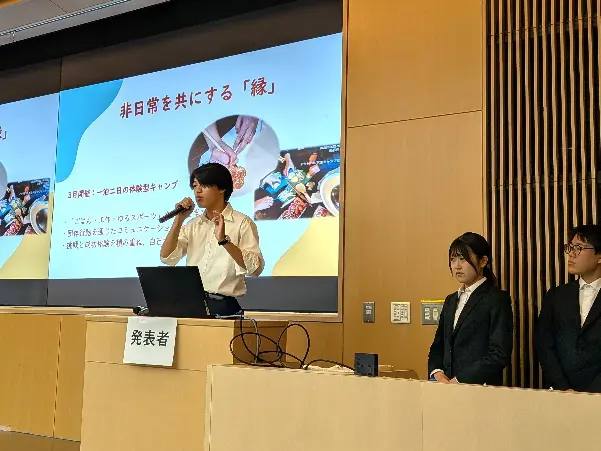
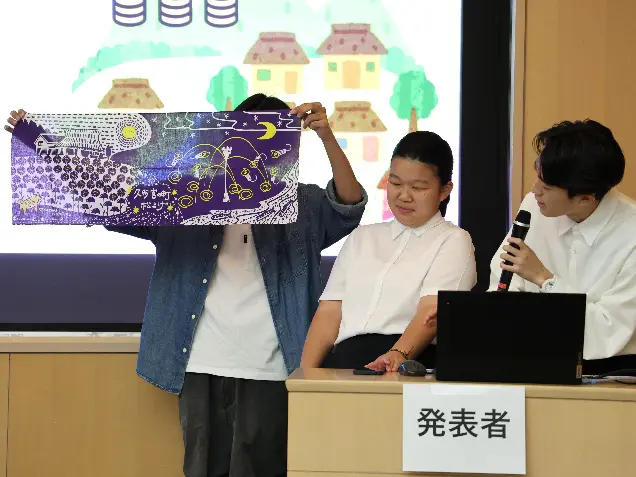
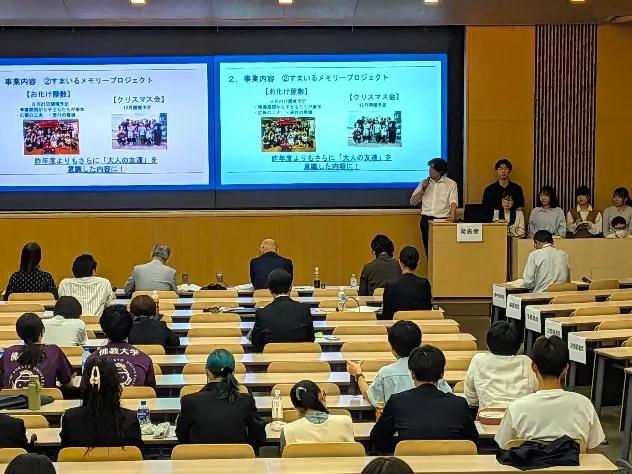
On Sunday, June 28th, the second round of selections for the 2026 Student-Community Collaboration Project (Standard Category) was held at Campus Plaza Kyoto.
24 groups that passed the first round presented their passionate ideas about their projects and how they plan to collaborate with the community.
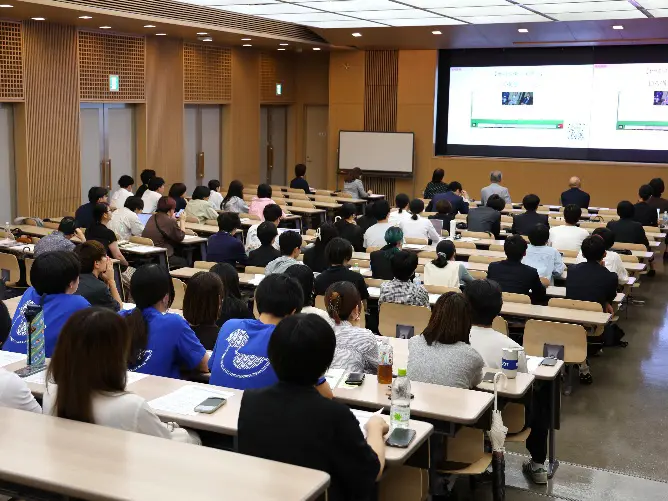
This year, there were many diverse project proposals, including those in welfare, the environment, and science, resulting in a well-attended judging session with presentations on a wide range of themes. For the presenting groups, it was also an opportunity to gain new perspectives and inspiration by listening to the presentations of other groups.
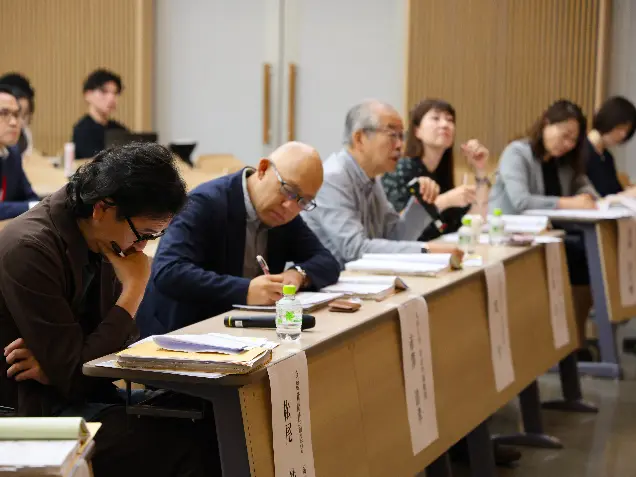
Many attendees, including people involved in the projects and those interested in community collaboration, came to the venue and listened attentively to the presentations. The
judges asked insightful questions about feasibility, sustainability, and building relationships with the community, as well as offered encouraging advice, making it a valuable opportunity for the presenting groups to contribute to their future activities.
2020 Certification Ceremony and Exchange Meeting
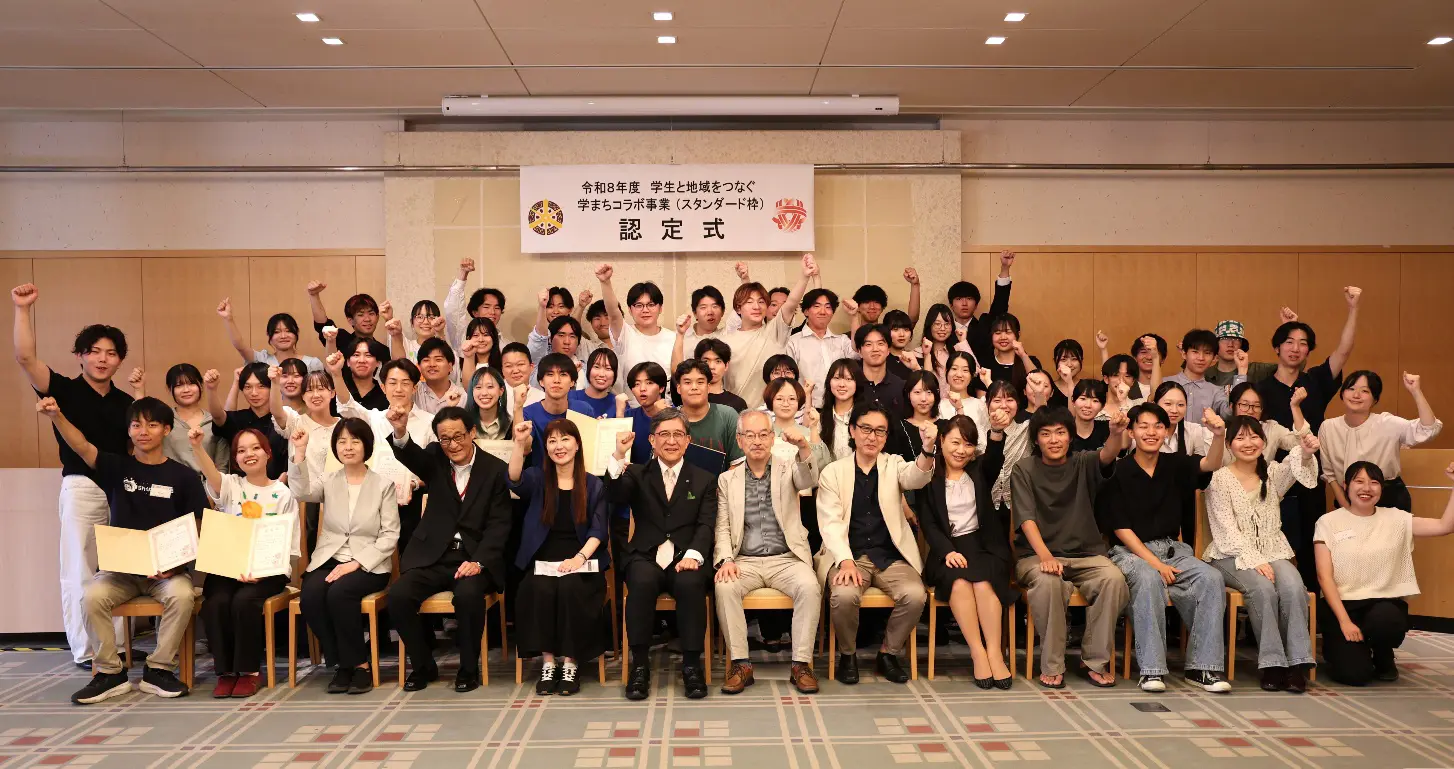
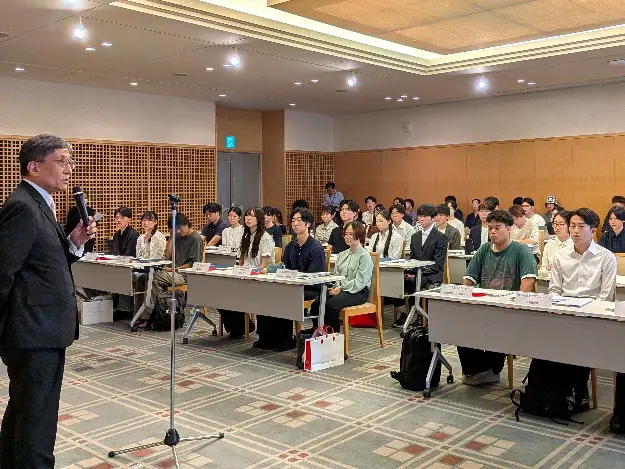
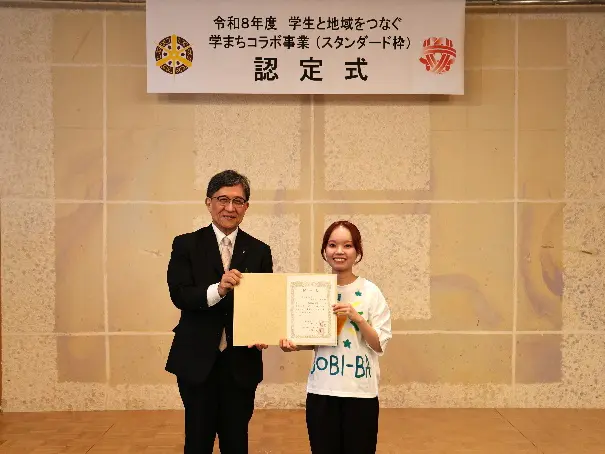
On Saturday, July 25th, the certification ceremony for the 2026 “Student-Community Collaboration Project (Standard Category)” was held at Campus Plaza Kyoto. Kyoto Mayor Matsui presented certificates to the 16 organizations selected this year. The mayor expressed his
hope that “in order for Kyoto to continue to balance tradition and innovation, more young people will become involved in the community.” He also encouraged the organizations to connect their community activities to their own learning and growth, to cherish connections with diverse communities and people, and to actively utilize the wisdom of those around them. Representatives from each organization who received a certificate expressed their determination for future activities.
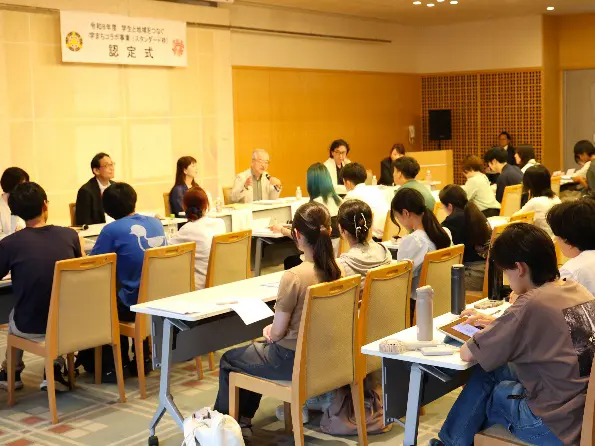
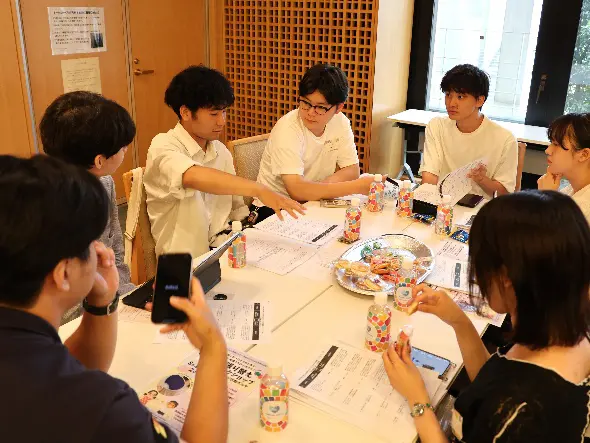
Following the certification ceremony, a review session was held where representatives from each organization asked questions to the selection committee. This provided a valuable opportunity to gain new insights and hints for future activities through the advice and opinions of the selection committee. At the subsequent
networking event, organizations with similar aspirations exchanged information about their activities, and it is hoped that this will lead to broader “horizontal connections” between organizations, resulting in further exchange and collaboration.
Now, the activities of each organization will officially begin!
We will be posting updates on our future activities on the University Consortium Kyoto website and the university-community collaboration portal site “GAKUMACHI STATION,” so please stay tuned!
・https://www.gakumachi.jp/
7. Recruitment for trial positions
For details, please check the trial program website below.
Trial Program Website: https://www.consortium.or.jp/project/chiiki/gakumachi-trial
Contact Information
Kyoto University Consortium, Public Interest Incorporated Foundation, Gakumachi Collaboration Project Contact:
TEL: 075-353-9130 FAX: 075-353-9101
MAIL: gakumachi-admin-ml■consortium.or.jp
(Please replace ■ with @ when sending)
Address: Campus Plaza Kyoto, Shio-koji-dori, Nishinotoin-dori, Shimogyo-ku, Kyoto 600-8216
*Office hours: Tuesday-Saturday 9:00-17:00