


- Business Overview
- Outline of the event
- Dec 14 (Sun) Tournament
- List of Winners
- Policy Advisory Panel
- Publications
- About application
- entry
- Paper Submission
- What happens after submission?
- About the announcement
- Main Schedule
Business Overview
The Policy Research Exchange Conference has been held since 2005 with the aim of providing a place for students who are conducting research to identify and solve problems and issues facing cities to present their daily research results, deepen exchanges beyond the boundaries of universities and seminars, and make policy proposals and disseminate information to local communities.
The 21st Policy Research Exchange Conference from Kyoto
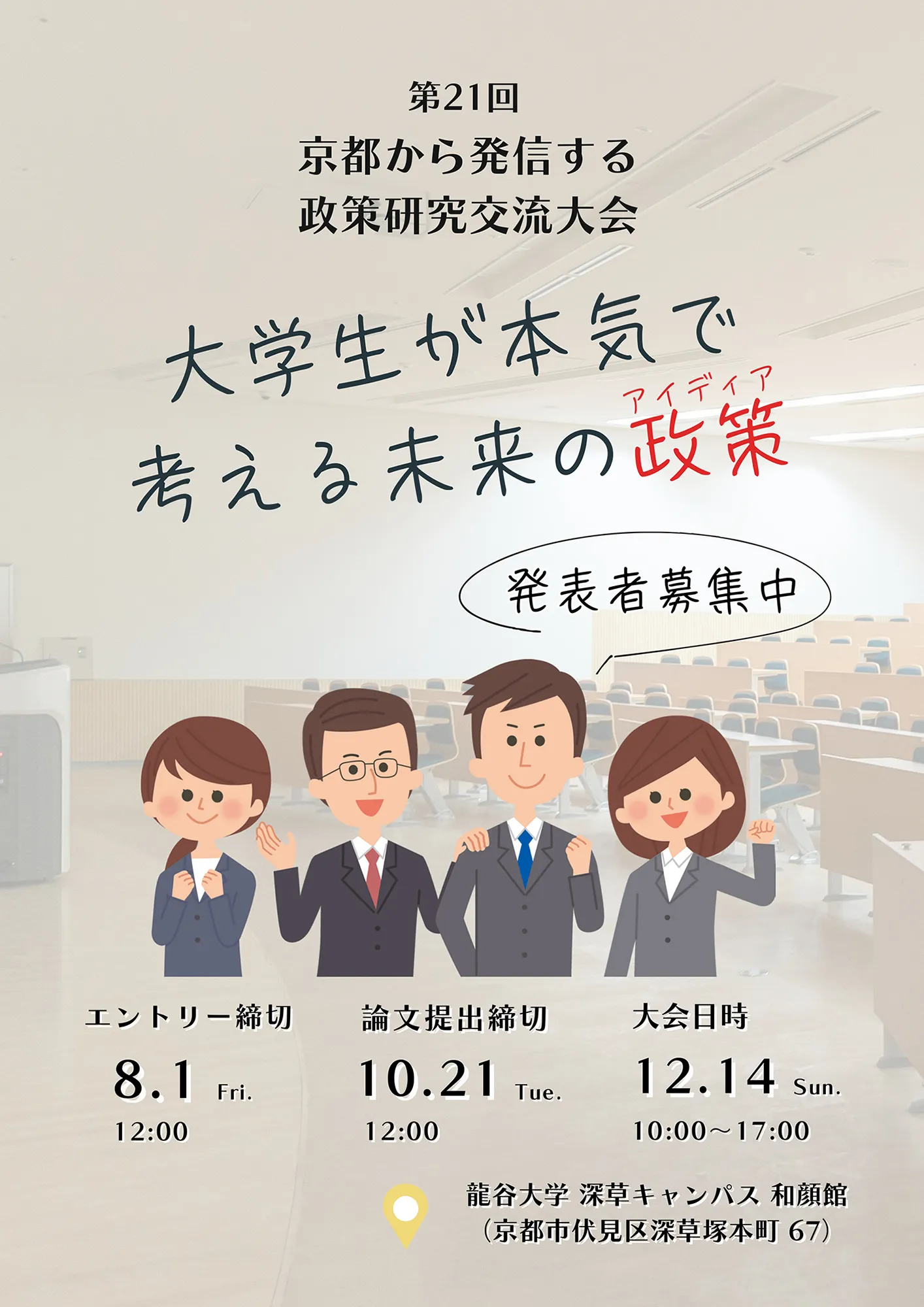
This tournament is the 21st since it was held in 2005.
The theme of the presentation was “Urban Policy in General”. Research presentations are made on policies to solve the problems faced by cities from the perspectives of a wide range of fields such as the environment, economy, culture, community, and welfare.
Seeing various presentations beyond the boundaries of universities and faculties may be a good stimulus for future research. On the day of the tournament, in addition to presentations, we will also hold an exchange meeting with the certified organizations of the Gakumachi Collaboration Project, and we will also carry out a project that students can enjoy.
In addition, after the competition, all presenters will be sent a report card with their scores and judges’ comments, as well as a comment sheet for the attendees of the breakout session, so please use it for feedback on your presentation. In addition, the winners of the higher prizes will be able to exchange opinions with the administrative staff related to the content of the presentation after the competition and deepen their research.
Would you like to present the results of your daily research and learning at this conference?
We look forward to your application!
| Re | Sunday, December 14, 2025 10:00~17:00 *The end time may vary slightly depending on the number of applicants. |
| Format | In-person presentation |
| Venue | Ryukoku University Fukakusa Campus Wamenkan (67 Fukakusazuka Honmachi, Fushimi-ku, Kyoto) ・Get off at Inari Station on the JR Nara Line and walk southwest for about 8 minutes ・Get off at Keihan Main Line “Ryukoku Omae Fukakusa” Station and walk west for about 3 minutes ・Get off at Kuinabashi Station on the Kyoto Municipal Subway Karasuma Line and walk east for about 7 minutes |
| sponsorship | Consortium Kyoto |
| Planning and operation | Urban Policy Research Promotion Committee |
| Presentation Themes | Urban policy in general (“city” here is not limited to “city”) ≪ to keep in mind≫ Clarify the awareness and issues of the problem, and structure it to be a concrete and original policy proposal based on the background and investigation and analysis of the current situation. |
Presentation format: Oral presentation
After submitting a paper in advance, undergoing a presenter qualification examination and paper review, you will be asked to give an oral presentation on the day of the conference.
The presentation time is 25 minutes, 15 minutes for presentations and 10 minutes for Q
Dec 14 (Sun) Tournament
This tournament, which will be held for the 21st time, was held for the third consecutive year from 2023 at the Ryukoku University Fukakusa Campus Waken Hall. Of the 79 groups that passed the presenter qualification screening, 77 groups, excluding the two who declined, were divided into 10 subcommittees to present their research on a wide range of topics related to urban policy, and at each subcommittee, two judges and designated questioners answered questions and answers.
In addition, the general public was accepted to participate in this tournament as well, and many general visitors, including government officials and university officials, listened intently.
After the presentations at each subcommittee, the ” Participatory > Learning Town Collaboration Project Report Meeting” was also held using the time leading up to the award ceremony, and about 50 students participated. The three groups certified by the project presented their efforts and engaged in a lively Q session.
The award ceremony was held in B201 on the second basement floor, which can accommodate up to 450 people, but there were many students standing, and every time the award-winning organizations were announced, voices of joy and applause resounded. At the presentation of the Research Encouragement Award, the students gave their award speeches with joy and happily took a group photo on stage, indicating that this conference is a place for the presenters to learn and be rewarded.
In the participant questionnaire after the tournament, “I was able to see high-level presentations, which was very helpful,” “I was able to find many areas for improvement by having people outside the university evaluate our activities,” and “It gave me an opportunity to think about what I should do from preparation to presentation and what kind of presentation to convey to others.” Many opinions were received about the students’ feelings of their own growth and the significance of holding the tournament.
In addition, this year’s conference was very fulfilling overall, with many students eagerly listening to the presentations until the end at each subcommittee, and the number of general visitors was large.
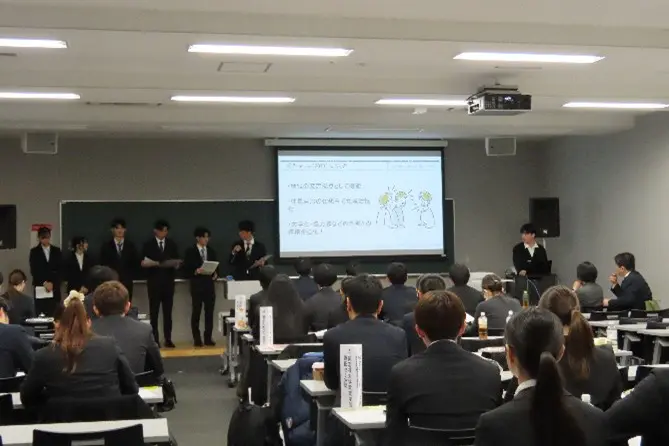 Presentation of the breakout session 1
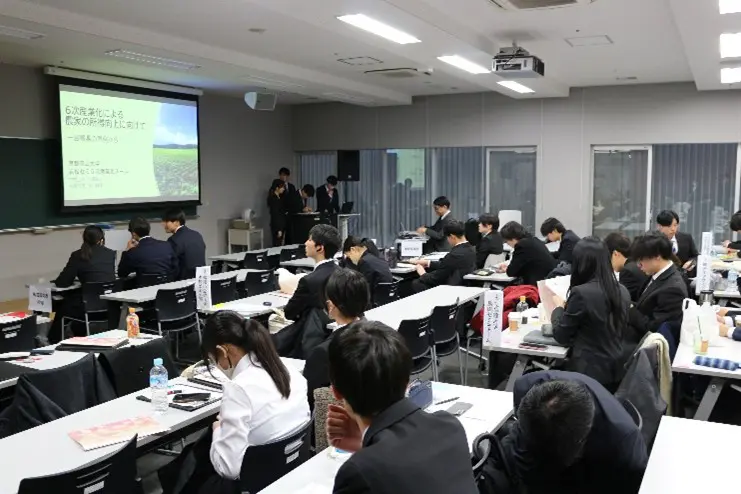 Presentation of the breakout session 2
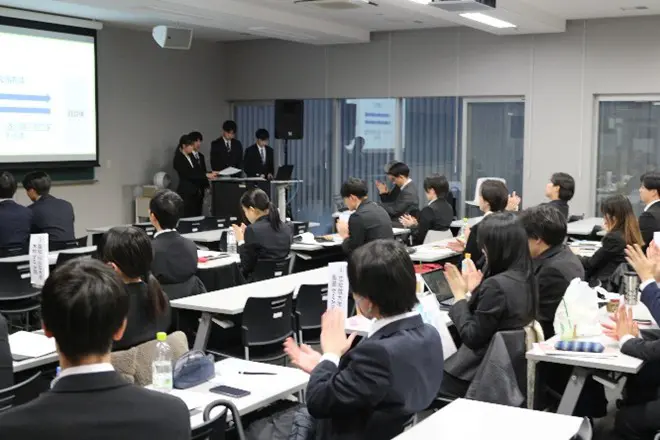 Presentation of the breakout session 3
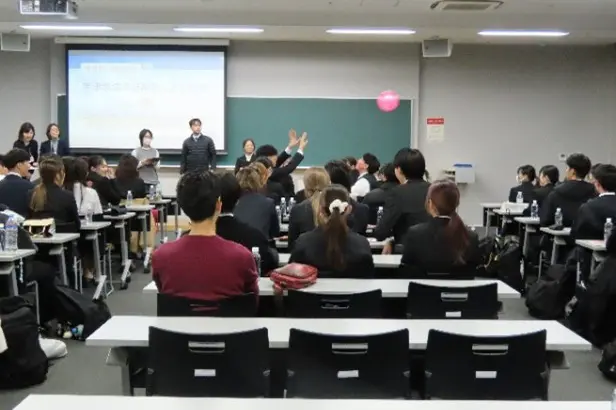 participatory > school town collaboration project report meeting
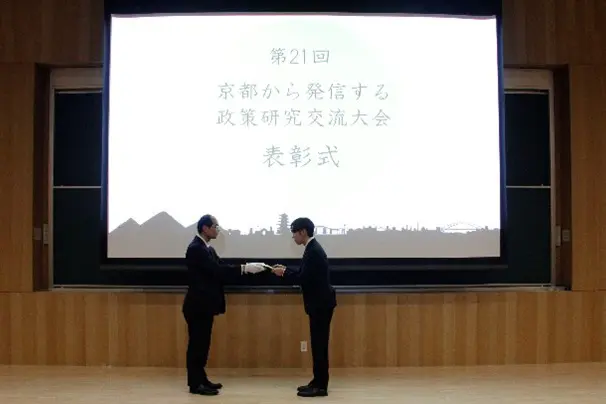 Award ceremony 1
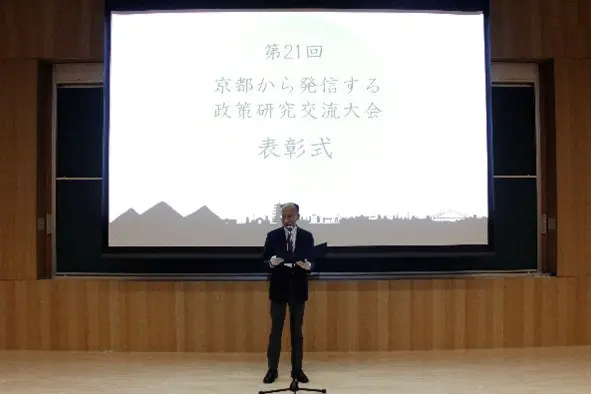 Award ceremony 2
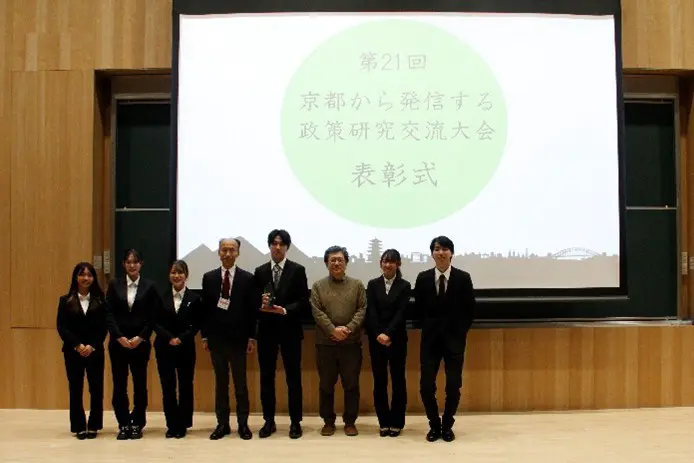 Award Ceremony 3
(Japan Institute of Public Policy Award Winners)
Doshisha University Faculty of Policy Studies Kazama Seminar Idea Bakery Group
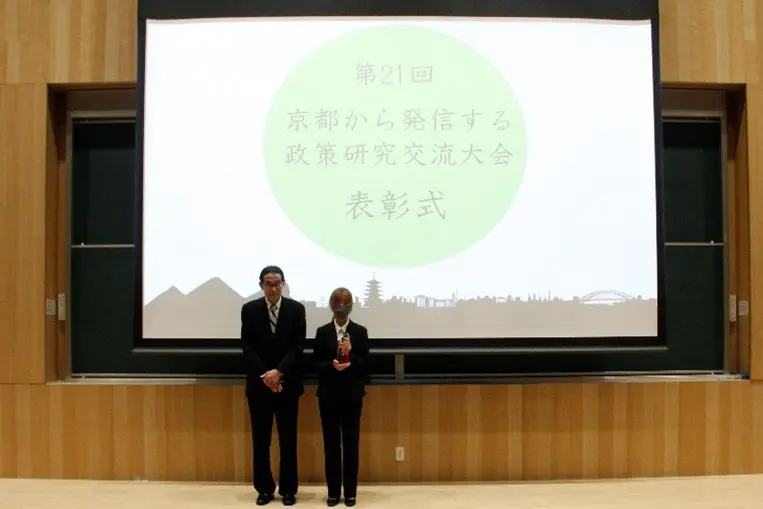 Award ceremony 4
(Recipient of the University Consortium Kyoto President’s Award)
Aika Takada (Fukuchiyama Public University)
List of Winners
Research Encouragement Award>
 Click to view the paper data and PPT data.
| Award Name | category | Presentation Title | division | Organization name (individual name) | Name of university | thesis PPT |
| University Consortium Kyoto President’s Award | Oral and Thesis | Possibility of Maintenance and Management Support and Disaster Prevention Utilization by Bridge Risk Score Using Open Data -A Case Study Using Bridge Data in Fukuchiyama City. | individual | Aika Takada | Fukuchiyama Public University |
Thesis PPT |
| Japan Society for Public Policy Award | thesis | Proposal of “Kyoto Idea Bakery” – Fostering collective knowledge through citizen exchange – | group | Kazama Seminar Idea Bakery Group | Doshisha University |
Thesis PPT |
| Award of Excellence | Oral Presentation | Examination of Effective Learning Support Methods for Promoting Legal Education: Starting from High School Education- | group | Kyoto Prefecture University Faculty of Public Policy 2nd year student Sato Seminar | Kyoto Prefectural University |
Thesis PPT |
| Award of Excellence | Oral Presentation | The Impact of the Survival of Traditional Festivals on Migration and Settlement – Focusing on Traditional Festivals that Create Regional Exchanges – | group | Iwamatsu Seminar Kakitama Soup Team | Kyoto Prefectural University |
Thesis PPT |
| Award of Excellence | Oral Presentation | Eliminating traffic congestion in Kyoto city center: Through measuring the effectiveness of road pricing and park-and-ride based on scenario analysis- | group | Doshisha University Adachi Laboratory A | Doshisha University |
Thesis PPT |
| Award of Excellence | Oral Presentation | Temporary housing supply issues in Kyoto City and proposals for wide-area evacuation support | group | 9th generation student of the Ishihara Seminar, Faculty of Policy Studies, Ryukoku University | Ryukoku University |
Thesis PPT |
| Award of Excellence | Oral Presentation | A Practical Study on Disaster Prevention Education for Children Aiming to Raise Disaster Prevention Awareness at Home | group | Fukuchiyama Public University Faculty of Regional Management Taniguchi Seminar Little Disaster Prevention Project | Fukuchiyama Public University |
Thesis PPT |
| Award of Excellence | Oral Presentation | Promoting Citizen Participation through External Design of Meetings: Verification of the Effectiveness of Holding Private Facilities | group | Doshisha University, Faculty of Policy Studies, Noda Seminar Group A | Doshisha University |
Thesis PPT |
| Award of Excellence | Oral Presentation | Children’s Medical Care Subsidy System and Social Growth and Decline: Panel Data Analysis for Kyoto City- | group | Tourism offside | Ryukoku University |
Thesis PPT |
| Award of Excellence | Oral Presentation | Purification of Touts in Downtown Areas Using Soundscapes: Possibilities of Resonance Approaches on Kiyamachi Street | group | Doshisha University Noda Seminar Class B | Doshisha University |
Thesis PPT |
| Award of Excellence | Oral Presentation | Shopping Street Revitalization Project Utilizing Vacant Stores – Toward Balancing Local Communities and Economic Independence – | group | Ritsumei☆Kato Seminar☆ | Ritsumeikan University |
Thesis PPT |
| Award of Excellence | Oral Presentation | How to Promote Safety and Security Awareness Flyers – Effective Information Dissemination from the Police – | group | Abe Seminar Team A | Kyoto University of Advanced Science |
Thesis PPT |
Reference: Click here for the PowerPoint of the papers and oral presentations of the 20th Annual Conference of the Research Encouragement Award
| division | Name of | Name of university |
|---|---|---|
| Groups | Doshisha Class | Doshisha University |
| Groups | Baby Lab | Ryukoku University |
| Groups | Doshisha University Adachi Laboratory A | Doshisha University |
| Groups | Otani University Nomura Seminar Transportation Policy Team | Otani University |
| Groups | Kyoto Tachibana University Takayama Seminar | Kyoto Tachibana University |
| Groups | Iwamatsu Seminar Shopping Street Revitalization Class | Kyoto Prefecture University |
| Groups | Iwamatsu Seminar 6th Industrialization Team | Kyoto Prefecture University |
| Groups | Doshisha University Noda Seminar Class | Doshisha University |
| Groups | Ritsumei☆Kato Seminar☆ | Ritsumeikan University |
| Groups | Abe Seminar Team A | Kyoto University of Advanced Science |
Policy Advisory Panel
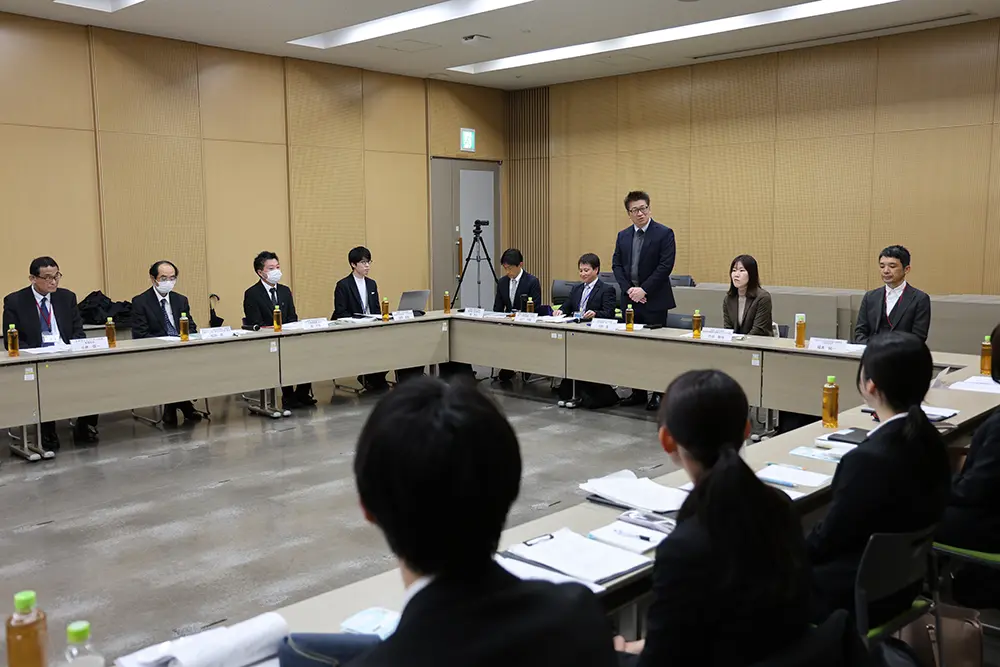
Based on the project promotion measures of the “Fifth Stage Plan (FY2019-2023)”, this association was launched in FY2019 with the intention of utilizing the research results and policy recommendations related to urban issues of students at the “Policy Research Exchange Conference from Kyoto” to actually solve issues faced by local communities and governments, and will be held for the seventh time in FY2025. As before, the attendees are organized so that government officials can express their frank opinions on students’ research results and policy proposals, and exchange substantive opinions.
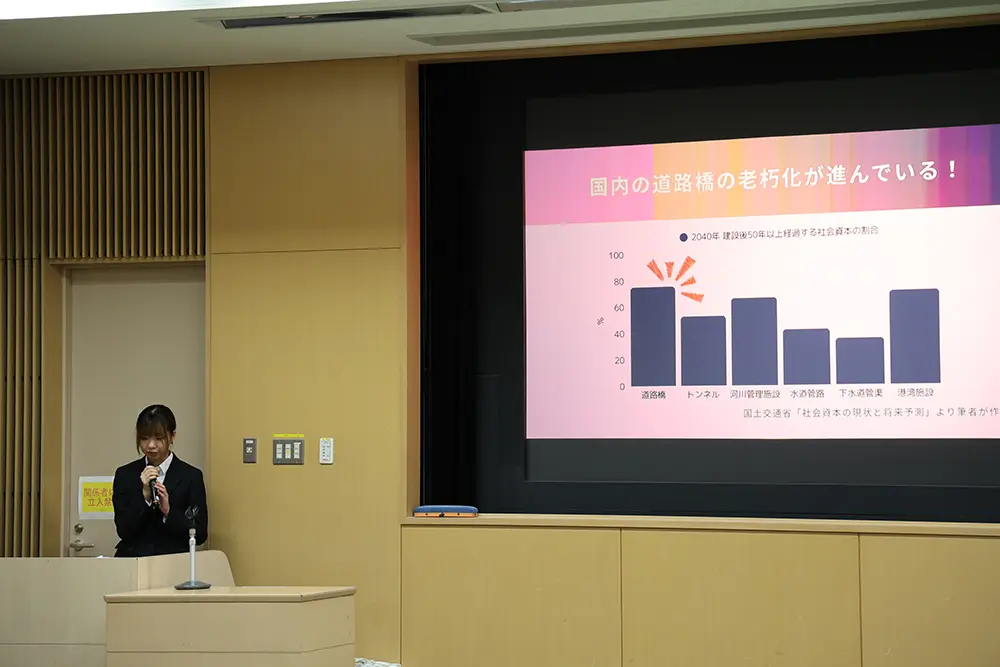
First, Ms. Aika Takada of the Faculty of Regional Management, Fukuchiyama Public University, who received the University Consortium Kyoto President’s Award, made a policy proposal titled “Possibility of Utilizing Bridge Risk Score for Maintenance and Management and Disaster Prevention Using Open Data: A Case Study Using Fukuchiyama City Bridge Data.” This proposal is a policy proposal that not only from the perspective of solving the problem of how the government will respond to aging bridges, but also from the perspective of utilizing bridge data from the perspective of disaster prevention. Administrative officials from Kyoto Prefecture and Kyoto City, who are actually in charge of bridge management, actively exchanged opinions, including advice on research and practical work at bridge repair sites.
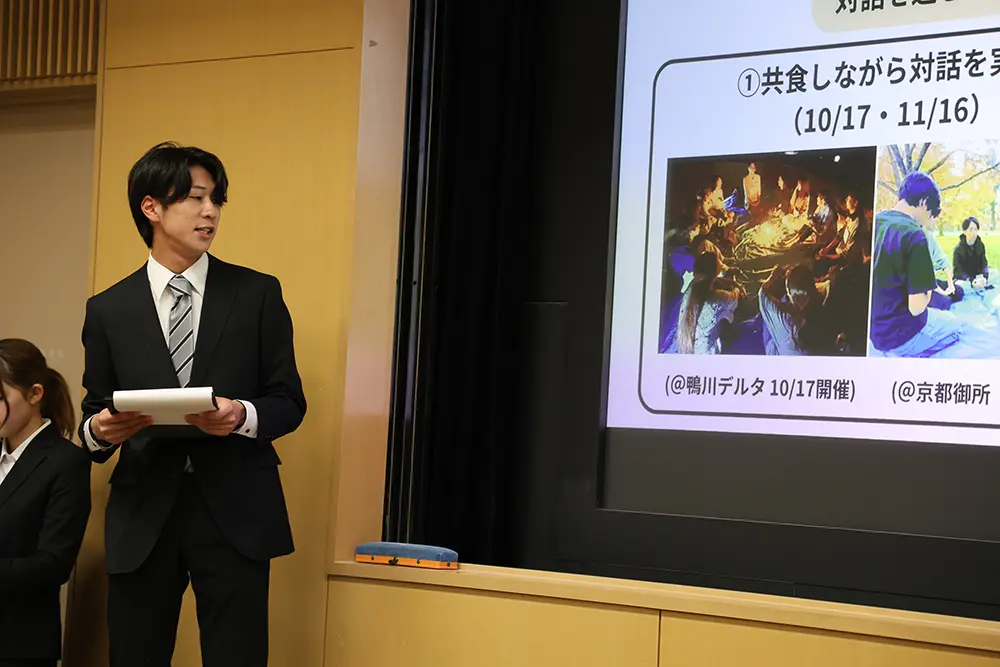
Next, the Kazama Seminar and Idea Bakery Group of the Faculty of Policy Studies, Doshisha University, which won the Japan Institute of Public Policy Award, made policy proposals titled “Proposal of ‘Kyoto Idea Bakery’ – Fostering Collective Intelligence through Citizen Exchange”, and proposed a municipal government participation system that would generate collective intelligence from the exchange of opinions among citizens from diverse backgrounds. In addition, it was recommended that text mining be used when analyzing the content of citizens’ dialogues, which can objectively show the flow of collective intelligence formation, and that the quality of policies can be improved by adding the perspectives and ideas unique to consumers. In response to this proposal, administrative officials from Kyoto Prefecture and Kyoto City actively exchanged opinions on the prefectural and municipal government participation systems, taking into account their practical experience as administrative personnel.
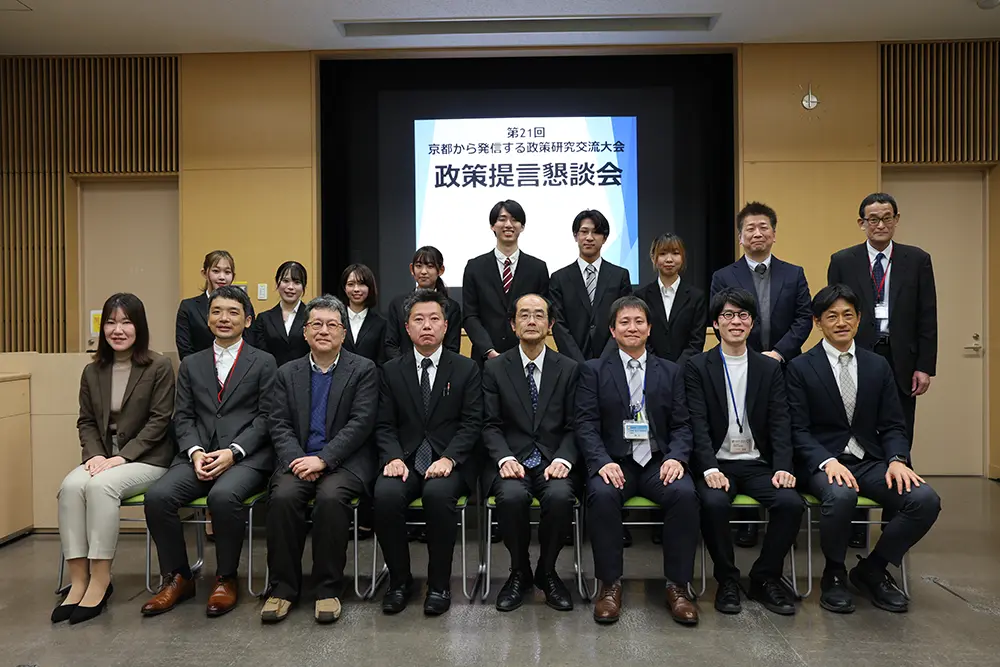
After the exchange of opinions, all attendees took a commemorative photo and the meeting was closed, but it was seen that this meeting also functions as a place for exchange between participants, such as government officials calling out to the presenters and government officials and their supervisors.
In the next fiscal year, the foundation will work to solve urban issues and further deepen its projects so that the research results of the “Policy Research Exchange Conference from Kyoto” will further lead to social implementation.
The 21st Policy Research Exchange Conference from Kyoto
The 21st Policy Research Exchange Conference from Kyoto
[Papers]
This is a paper related to the presentation. Please take a look at it as well.
〇 Papers (full volume)
Papers (full volume)
〇 Papers (divided into subcommittees)
Cover and Outline
table of contents
Outline of the Presentation
Breakout Session 1
Breakout Session 2
Breakout Session 3
Breakout Session 4
Breakout Session 5
Breakout Session 6
Breakout Session 7
Breakout Session 8
Breakout Session 9
Breakout Session 10
back cover
■ Commendation
Papers and oral presentations will be comprehensively evaluated, and outstanding presenters will be awarded the Research Encouragement Award.
| University Consortium Kyoto President’s Award | 1 (Top 1 Thesis and Oral Presentation) |
| Japan Society for Public Policy Award | 1 (top 1 paper-oriented project) |
| Excellence Award | 1 case from each subcommittee |
| Best Question Award | 1 case from each subcommittee |
◆ Please check the screening guidelines for screening methods and screening criteria.
About application
◆ Please be sure to check the application guidelines before applying.
■ Eligibility
Undergraduate and junior college students from member universities of the University Consortium Kyoto (both individual and group students are acceptable)
*In the case of a group consisting of students from multiple universities, the representative must be a student from a member university of the University Consortium Kyoto.
*Please be sure to carry out the paperwork related to the conference, such as entry and paper submission, by the above qualified personnel.
■ How to apply
Step 1 Entry(Deadline: August 1, 2025 (Friday) noon)
Entries are now closed.
Step 2 Submit your paper(Deadline: Tuesday, October 21, 2025 at noon)
Entries are now closed.
■ Explanatory video about the tournament
Please take a look at it as a reference for your application.
The first part is an overview of this competition, and the second part is a video explaining the points of judging by the competition judges and the research method.
Explanatory video for prospective applicants (first part)
Explanatory video for prospective applicants (second part)
2024 University Consortium Kyoto President’s Award Winner Group Announcement
(*This is a video of the Policy Research Exchange Conference on Sunday, December 15, 2024.) )
2024 Japan Society for Public Policy Award Winning Group Announcement
(*This is a video of the Policy Research Exchange Conference on Sunday, December 15, 2024.) )
Step 1 Entries by noon on Friday, August 1, 2025
Entries are now closed.
Step 2 Submission of papers by noon on Tuesday, October 21, 2025
Paper submissions are now closed.
About the announcement
■Explanation video for presenters
Please be sure to watch the group (individual) who has confirmed to participate in the conference as a presenter.
◇◇Table of Contents◇◇
1. Tournament Overview
2. Schedule
3. Oral presentation
4. Designated questioner system
5. Screening method
6. Notes on participating in the tournament
7. Introduction of the participatory > school town collaboration project content report meeting
Explainer videos for presenters
What happens after submission?
Presenter qualifications will be screened based on submitted papers, and in mid-November, we will notify you of your eligibility to present at the email address you entered in the application form.
◇◇ About the paper ◇◇
- If the paper is not prepared in the specified format, it may be judged as ineligible in the presenter qualification examination or subject to a point deduction in the thesis review.
- Submitted papers will be subject to dissertation review.
- Please note that the papers of the oral presenters will be published on this website as a collection of papers.
- The papers presented by the Prize winners and the PowerPoint data used for the oral presentations on the day of the conference will be posted on this website and on the “University/Regional Collaboration Portal Site Gakumachi Station” after the conference (we will check the publication individually).
Reference: Click here for the PowerPoint of the papers and oral presentations of the 20th Annual Conference of the Research Encouragement Award
Main schedule (updated from time to time)
| June 20, 2025 | Release of explanatory videos for prospective applicants |
| Friday, August 1, 2025 at noon | Entry Deadline |
| Tuesday, October 21, 2025 at noon | Paper Submission Deadline |
| Tuesday, November 18, 2025, 10 a.m | Release of explanatory videos for presenters |
| , December 14, 2025 | The 21st Policy Research Exchange Conference from Kyoto |